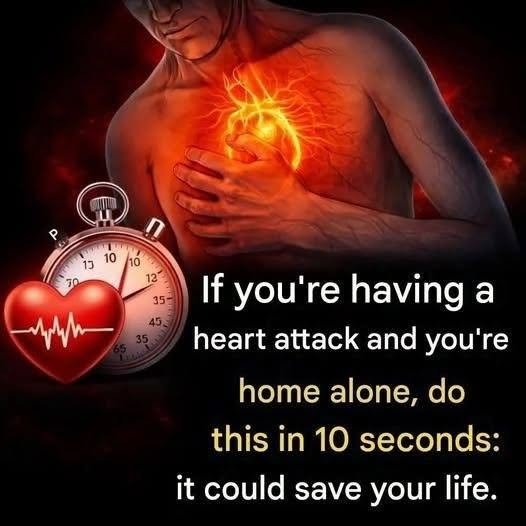
If you have seen a viral post or video claiming there is a simple “10-second trick” (such as aggressive coughing or “cough CPR”) to survive a heart attack at home, please disregard it.
Major medical organizations, including the American Heart Association (AHA), warn that this is a dangerous myth.
Why the “10-Second Cough Trick” is Dangerous
-
It is physiologically ineffective: A heart attack is a circulation problem caused by a blocked coronary artery. Vigorous coughing cannot unblock an artery or restart a stopped heart.
-
It confuses two different emergencies: Viral posts often mix up a heart attack (where the heart is usually still beating and the person is conscious) with cardiac arrest (where the heart stops entirely and the person collapses unconscious). If someone’s heart stops, they are unconscious and physically unable to cough.
-
It delays real help: Relying on a social media hack wastes precious minutes when professional medical intervention is required.
What You Should Actually Do in a Heart Attack Emergency
If you or someone around you is experiencing symptoms of a heart attack (such as chest pain or pressure, shortness of breath, cold sweats, or pain radiating to the arm, neck, or jaw), take these proven steps immediately:
-
Call Emergency Services: Call your local emergency number (like 911 or 999) right away. Do not wait to see if symptoms pass.
-
Sit Down and Rest: Stop what you are doing, sit or lie down in a comfortable position, and try to stay as calm as possible to reduce the heart’s demand for oxygen. Loosen any tight clothing.
-
Take Aspirin (if appropriate): If you are not allergic and have no history of bleeding disorders, chewing and swallowing an adult aspirin (usually 325 mg) can help slow down blood clotting.
-
Use Prescribed Medication: If you have been diagnosed with a heart condition and have a prescription for nitroglycerin, take it as directed by your doctor.
-
Do Not Drive Yourself: Never attempt to drive yourself to the hospital. Wait for emergency responders who can begin life-saving treatment on the way.
Are you or someone else currently experiencing symptoms, or were you looking up information regarding a post you saw online?