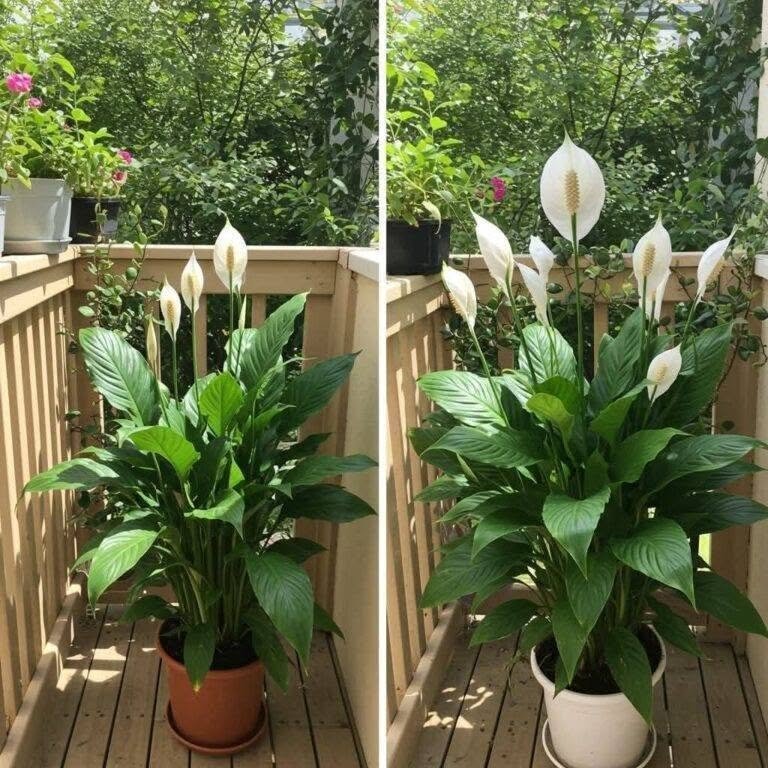
That viral gardening headline is designed to grab attention with a dramatic promise, but the kitchen hacks or “secret liquids” those articles typically promote are usually based on old gardening folklore.
While pouring a single cup of anything won’t instantly resurrect a dying plant overnight, the advice behind these viral posts almost always points to **organic, nutrient-rich watering methods** that genuinely supply vital minerals like potassium, phosphorus, and nitrogen.
Here is the complete, detailed breakdown of what those viral “1 cup” remedies actually are, why people use them, and the real horticultural science for making a peace lily bloom profusely.
—
### What Are Those Viral “1 Cup” Remedies?
Most articles with that headline suggest one of three common household DIY plant tonics:
1. **Rice Water:** The starchy water left over from rinsing or boiling unseasoned rice. It contains trace amounts of nitrogen, phosphorus, and potassium, plus starch that feeds beneficial soil microbes.
2. **Banana Peel Tea:** Soaking chopped banana peels in water for a few days to leach out high levels of potassium, which is the primary nutrient plants need to produce flowers.
3. **Epsom Salt Solution:** Dissolving a tablespoon of Epsom salt (magnesium sulfate) in water. Magnesium helps boost chlorophyll production and aids in nutrient uptake.
While these can act as a gentle, organic supplement, they are slow-acting soil conditioners, not instant magic potions.
—
### The Real Science: How to Get a Peace Lily to Bloom
If a peace lily is sending out plenty of green leaves but refusing to flower, it requires environmental adjustments rather than a kitchen shortcut:
* **Light is the #1 Factor:** Peace lilies are famous for surviving in low-light office corners, but **they will not bloom without bright, indirect light**. Moving a struggling plant closer to an east- or north-facing window (protected from harsh, direct afternoon sun that can scorch the leaves) gives it the energy required to push out spathes.
* **Phosphorus and Potassium Balance:** Nitrogen encourages leaf and stem growth, but phosphorus and potassium trigger flowering. Using a balanced, water-soluble houseplant fertilizer diluted to half-strength during the active spring and summer growing seasons provides the necessary fuel for blooms.
* **Proper Watering Cycles:** Peace lilies are dramatic—they will droop dramatically when thirsty and perk right back up after a drink. However, chronically dry soil or waterlogged roots stress the plant and halt flower production. Water thoroughly only when the top inch of soil feels dry.
* **Root Bound Status:** Ironically, peace lilies actually prefer to be slightly root-bound. If a pot is too large, the plant spends all its energy growing roots rather than producing flowers. Only repot every 2 to 3 years into a pot just 1 to 2 inches larger.
—
### The Bottom Line
You don’t need a secret internet tonic to save an “ugly” peace lily. Trimming away dead or yellowing leaves, moving it to a brighter spot, and maintaining a consistent watering and gentle feeding schedule will naturally coax it back into a heavy blooming cycle.
Are you trying to nurse a sad-looking peace lily back to health, or looking for more tips on household plant care?