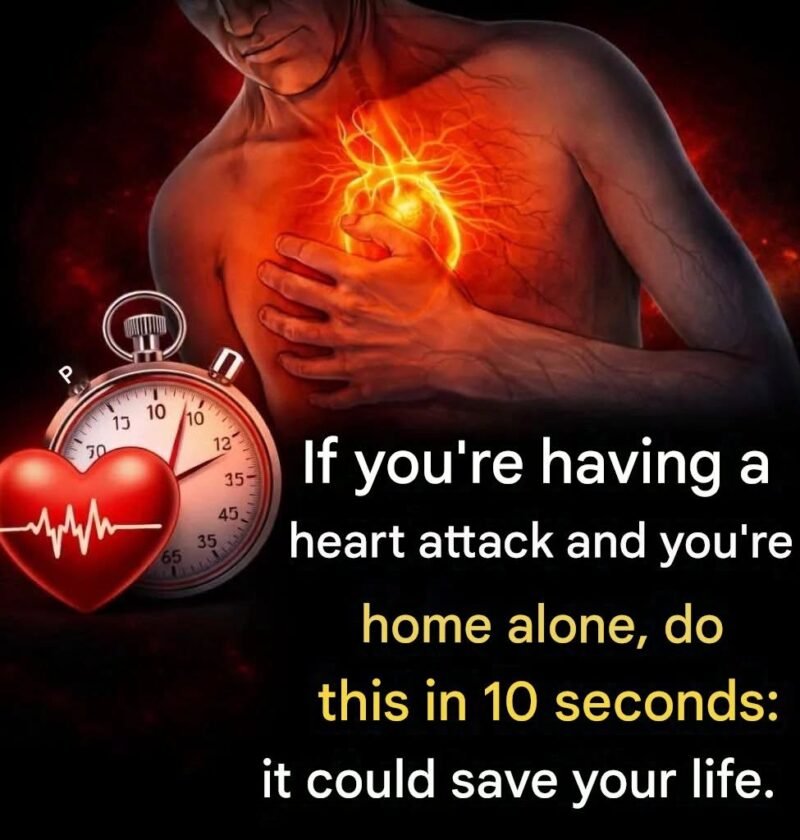
When viral health tips promise a miraculous, instant self-treatment for a heart attack at home—most famously the viral myth of “cough CPR” (vigorous, repetitive coughing)—it is vital to separate dangerous internet fiction from medical reality.
While the headline suggests a quick 10-second fix, cough CPR does not work for a sudden heart attack and can actually be dangerous.
Here is what you need to know about why viral tricks fail and what you should actually do in an emergency:
The Myth of “Cough CPR”
-
The Claim: The viral advice suggests that if you feel a heart attack coming on, you should cough repeatedly and forcefully every couple of seconds to “squeeze” the heart and keep blood flowing.
-
The Reality: Real cardiac arrest (where the heart stops beating effectively) causes a person to lose consciousness within seconds. A conscious person experiencing chest pain is usually suffering from a heart attack (myocardial infarction)—a blocked artery—not full cardiac arrest. Forceful coughing cannot clear a blocked coronary artery, and performing vigorous cough maneuvers when you are panicked or experiencing ischemia can actually raise your blood pressure, increase your heart’s demand for oxygen, and worsen the emergency.
What to Do Immediately If You Suspect a Heart Attack at Home
If you or someone nearby experiences classic heart attack symptoms (crushing chest pressure, pain radiating down the arm or jaw, sudden shortness of breath, cold sweats, or lightheadedness), every single second counts.
Instead of unverified online hacks, follow these steps:
-
Call Emergency Services Immediately (e.g., 911): Do not wait to see if the pain passes, and do not try to drive yourself to the hospital. Emergency medical technicians (EMTs) begin life-saving treatment the moment they arrive.
-
Chew an Aspirin (If Advised): Unless you are allergic to aspirin or have been explicitly told by a doctor never to take it, chewing and swallowing an uncoated aspirin can help slow down blood clotting while emergency help is on the way.
-
Stop What You Are Doing and Sit Down: Rest immediately to reduce the physical workload on your heart. Loosen any tight clothing around your neck or chest.
-
Unlock Your Door: If you are home alone, unlock your front door so emergency responders can enter quickly if you lose consciousness.
Emergency Note: A heart attack is a critical medical emergency. Never rely on home remedies or online tips when minutes matter most.
Are you looking into heart attack first aid out of general preparedness, or are you or someone you know currently experiencing worrying symptoms?