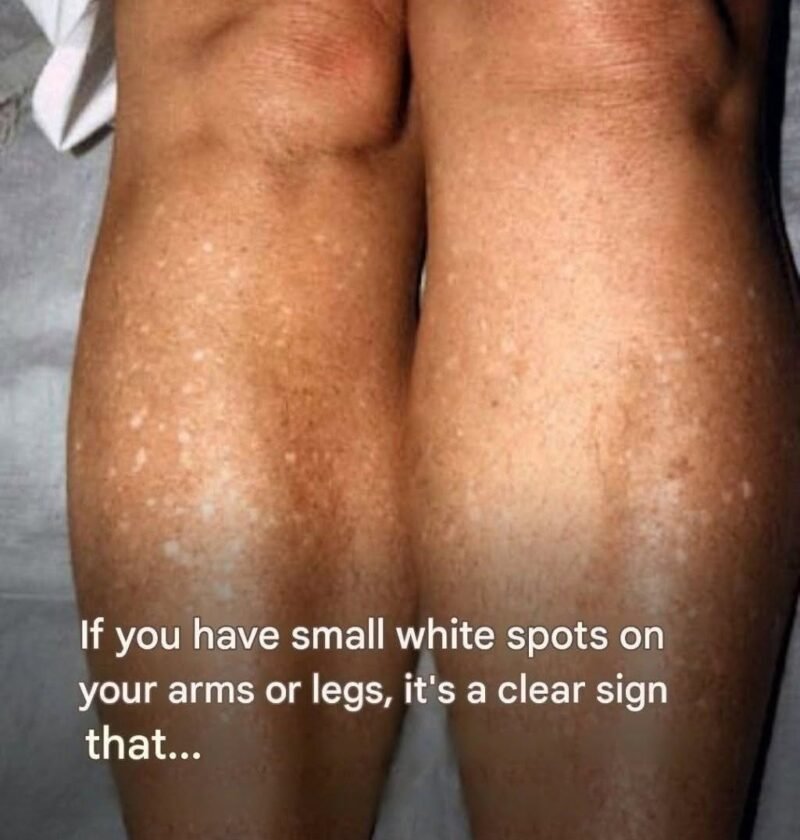
If you’re referring to the common white or pale spots that become noticeable during summer, one possibility is tinea versicolor, a superficial yeast overgrowth. It is especially common in hot, humid weather and with sweating. The spots may be lighter or darker than surrounding skin, sometimes slightly scaly or itchy, and they often become more obvious after tanning because the affected areas don’t tan normally. American Academy of Dermatology+1
Why do the spots appear in summer?
The yeast Malassezia normally lives on everyone’s skin. In warm, humid conditions—and particularly when there is increased sweating or oily skin—it can grow excessively and interfere with normal pigmentation. American Academy of Dermatology+1
But not every white spot is a fungal infection. Other possibilities include eczema-related pityriasis alba, vitiligo, and other pigment disorders. A dermatologist can distinguish these by examining the skin and, when necessary, using a Wood’s lamp or examining a skin scraping. American Academy of Dermatology+1
How is tinea versicolor treated?
For mild cases, dermatologists may recommend an antifungal cream, lotion, or medicated shampoo. Common active ingredients include selenium sulfide, ketoconazole, miconazole, clotrimazole, or terbinafine, depending on the product and location of the spots. Follow the product directions rather than applying these medications indiscriminately. American Academy of Dermatology+1
One thing that surprises many people: the fungus can be gone before the skin color returns to normal. Light or dark patches may remain visible for weeks or even months while pigmentation gradually recovers. American Academy of Dermatology+1
Using broad-spectrum SPF 30+, avoiding tanning, and reducing excessive heat and sweating can also make the contrast less noticeable and may help prevent recurrence. American Academy of Dermatology
When should you see a dermatologist?
Get the spots checked if they’re spreading, completely white with sharply defined borders, repeatedly returning, associated with significant itching/scaling, or not improving with appropriate treatment. It’s particularly important not to assume every pale patch is “fungus,” because treatment depends on the actual diagnosis.
Bottom line: Summer-related white spots are often harmless, and tinea versicolor is one common explanation—but appearance alone isn’t enough to diagnose it.
Sources