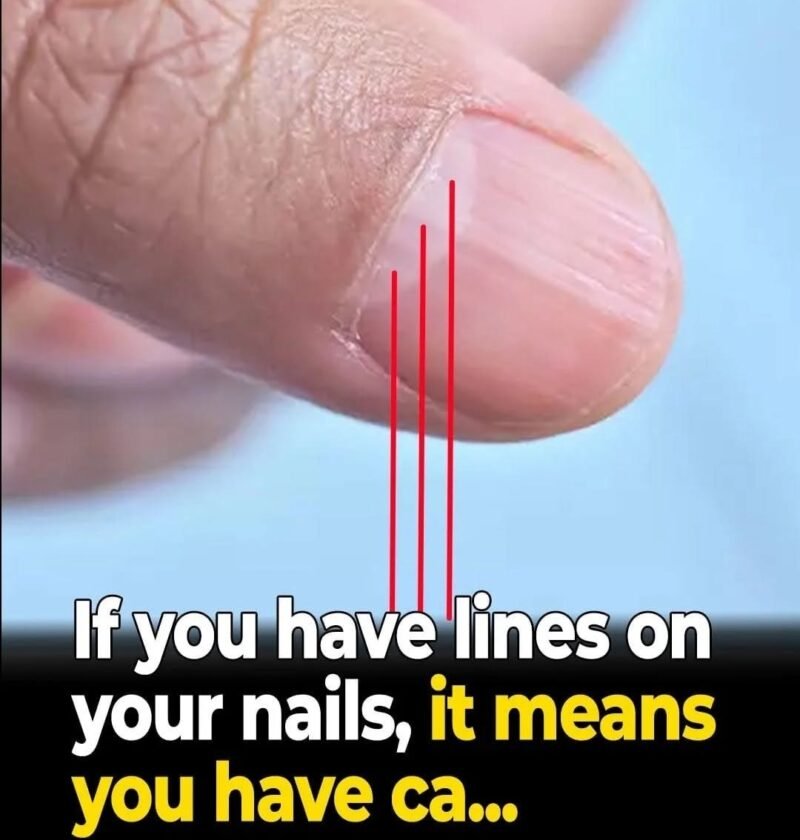
Just like your skin or hair, your fingernails act as a window into your overall health. Dermatologists and physicians often check fingernails during a physical exam because shifts in their texture, color, or shape can signal internal changes.
When it comes to lines on your fingernails, dermatologists separate them into two main categories: vertical lines and horizontal lines. Here is what they usually mean—and when they actually deserve medical attention.
1. Vertical Lines (Running from Cuticle to Tip)
If you notice fine, parallel lines running up and down your fingernails, you are looking at the most common type of nail ridge.
-
What they usually mean: Aging. Just as skin develops fine lines over time, the nail matrix experiences slower cell turnover as you get older. These vertical ridges are typically a harmless, natural part of getting older.
-
Other potential causes: Mild, chronic dryness or occasional nutritional gaps.
-
When to pay attention: If the vertical lines are accompanied by severe splitting, thinning, or structural changes (such as the nail bowing inward like a spoon, which can point to iron-deficiency anemia), it’s worth a chat with your doctor.
2. Horizontal Lines (Running Side-to-Side Across the Nail)
Lines or deep grooves running horizontally from left to right (known medically as Beau’s lines) are a different story.
-
What they mean: A temporary pause in nail growth. Nails grow slowly, but when your body undergoes severe physical stress, high fever, systemic illness (like pneumonia or severe infections), major surgery, or sudden metabolic shock, it redirects energy away from non-essential tasks like growing hair and nails.
-
Other potential causes: Unmanaged diabetes, extreme emotional stress, certain medications (like chemotherapy), or a direct physical injury to the nail matrix.
-
When to pay attention: Because nails grow out slowly (taking about 4 to 6 months to completely replace themselves), a horizontal groove usually tells a story about something your body went through a couple of months ago. However, if they appear repeatedly for no clear reason, or if they are paired with other symptoms like fatigue or unexplained weight changes, you should consult a doctor.
Other Nail Changes That Always Deserve Attention
While standard lines are often benign, dermatologists emphasize that certain other nail markings require a prompt medical evaluation:
-
A Dark Vertical Streak: A brown or black band running vertically down the nail that didn’t come from an injury should be checked by a dermatologist. In rare cases, it can be a sign of a serious form of skin cancer under the nail (subungual melanoma).
-
Pitting: Small dents or nicks that look like they were made by an icepick can be linked to inflammatory skin conditions like psoriasis, eczema, or alopecia areata.
-
Splinter Hemorrhages: Tiny dark reddish-brown lines that look like small splinters under the nail plate. While often caused by minor trauma, if multiple fingers show them alongside a fever, it can sometimes signal an infection of the heart valves.