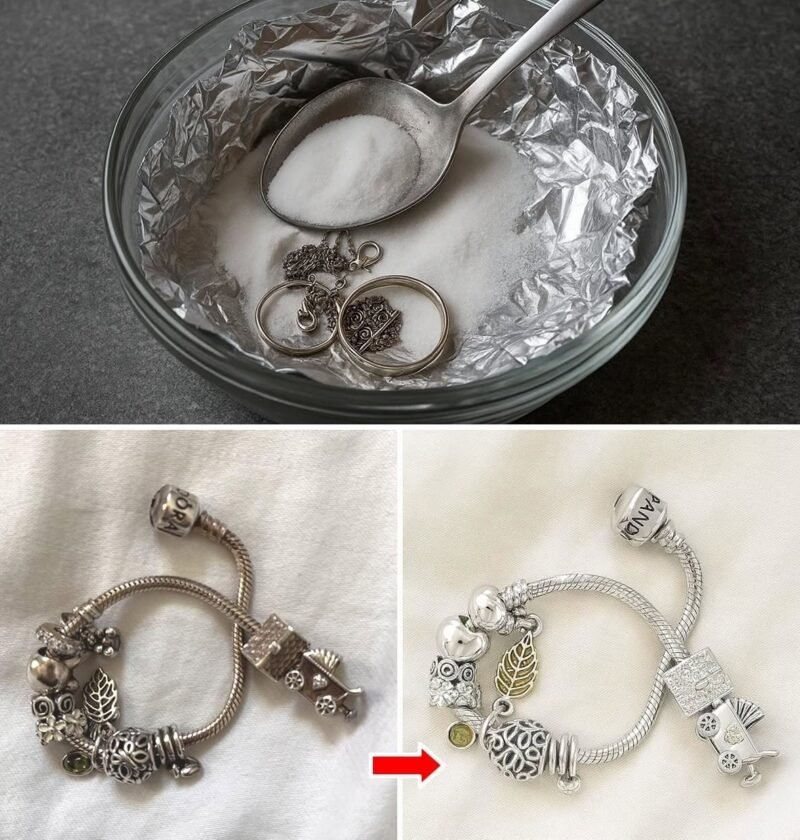
Silver naturally tarnishes over time when sulfur compounds in the air react with the metal, creating a dark, blackened sulfide layer. While commercial silver polishes exist, you can easily restore sterling silver to a brilliant shine using a few common household items—without scrubbing away precious metal.
Method 1: The Aluminum Foil & Baking Soda Bath (Best for Heavy Tarnish)
This is a classic, chemistry-backed method that uses an electrochemical reaction to reverse tarnish in minutes, completely safely and without abrasive scrubbing.
What You Need:
-
A glass or ceramic bowl (or your kitchen sink lined with foil)
-
Aluminum foil
-
1 tablespoon of baking soda per cup of boiling water
-
1 tablespoon of salt
-
Boiling water
-
A soft microfiber cloth
Instructions:
Method 2: The Gentle Baking Soda Paste (Best for Engravings or Details)
If your silver piece has deep grooves, textured details, or intricate engravings where tarnish hides, a gentle paste lets you target specific areas.
-
How to use: Mix baking soda with a few drops of water until it forms a thick, smooth paste. Using a soft microfiber cloth or your fingers (avoid stiff bristled brushes), gently dab the paste onto the tarnish. Rub very softly in linear motions—do not scrub harshly, as baking soda is mildly abrasive and can scratch fine silver or plated finishes. Rinse thoroughly with warm water and buff dry.
Important Things to Avoid
-
Never Use Toothpaste: A popular internet myth claims toothpaste cleans silver. In reality, modern toothpastes contain abrasive silica or baking agents that create microscopic scratches, permanently dulling silver’s reflective shine.
-
Keep Away from Bleach and Chlorine: Harsh chemicals pit and permanently ruin sterling silver.
-
Check for Silver Plate: If your item is silver-plated (rather than solid sterling silver), use extra caution and avoid aggressive rubbing, as the thin silver layer can wear down to the base metal underneath.