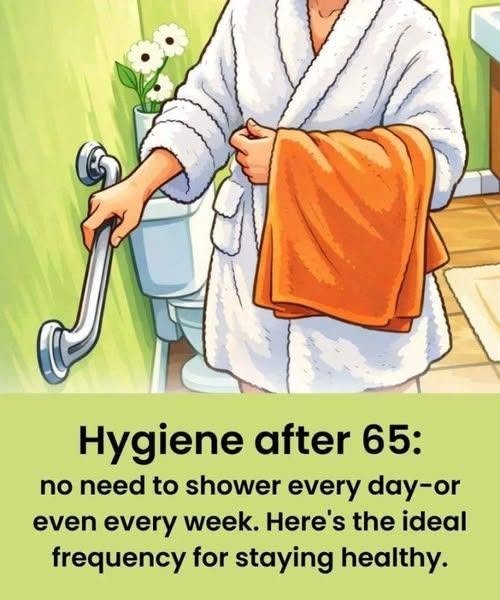
For most of our lives, a daily shower is a non-negotiable part of personal hygiene. However, dermatologists and geriatric specialists point out that as we age—specifically after 65—showering every single day can actually start working against our body’s natural physiological changes.
Here is why scaling back to a few showers a week is often recommended, along with smarter ways to stay fresh and safe:
1. Skin Dries Out and Loses Its Protective Barrier
-
The Science: As we age, our skin naturally produces less sebum (natural oils), and the outer epidermal layer thins out.
-
The Problem: Daily washing—especially with hot water and harsh, fragranced soaps—strips away what little natural moisture remains. This leads to senile xerosis (severe dry skin), flaking, intense itching, and microscopic cracks that can make the skin vulnerable to bacterial infections.
2. Disruption of the Skin Microbiome
-
The Science: Healthy skin hosts a delicate balance of “good” bacteria and microorganisms that protect against pathogens and inflammation.
-
The Problem: Scrubbing with antibacterial soaps every day destroys this protective microbiome, potentially leading to chronic irritation, redness, and dermatitis.
3. Increased Risk of Bathroom Slips and Falls
-
The Reality: Bathrooms are among the most hazardous rooms in the home. Slippery tile, wet bathtubs, and stepping in or out of high-rim enclosures pose a significant physical challenge.
-
The Problem: Standing for long stretches under a hot shower can cause blood vessels to dilate, dropping blood pressure and triggering dizziness or lightheadedness, which significantly raises the risk of a dangerous fall.
How Often Should You Shower After 65?
Dermatologists generally recommend that older adults shower or bathe 2 to 3 times a week, rather than every day, unless they have engaged in heavy sweating, gardening, or strenuous exercise. On the “in-between” days, a simple sponge bath focusing on key areas (underarms, groin, and face) is more than enough to maintain pristine hygiene without stressing the skin.
Tips for Skin-Friendly and Safe Bathing
-
Lower the Temperature: Hot water feels luxurious, but it dissolves skin oils much faster than lukewarm or warm water. Keep showers short (under 10 minutes).
-
Swap Harsh Soaps for Gentle Cleansers: Ditch heavily perfumed, drying bar soaps in favor of hydrating, soap-free body washes or lipid-rich cleansers.
-
Moisturize Immediately: Apply a fragrance-free moisturizing cream or lotion while your skin is still slightly damp after patting dry—this locks in crucial hydration.
-
Upgrade Bathroom Safety: Install grab bars inside and outside the shower, use a non-slip bath mat, and consider adding a sturdy shower chair to sit comfortably and prevent dizzy spells.
Do you or a loved one prefer a daily shower routine, or have you found that adjusting your bathing schedule helps keep your skin feeling more comfortable?