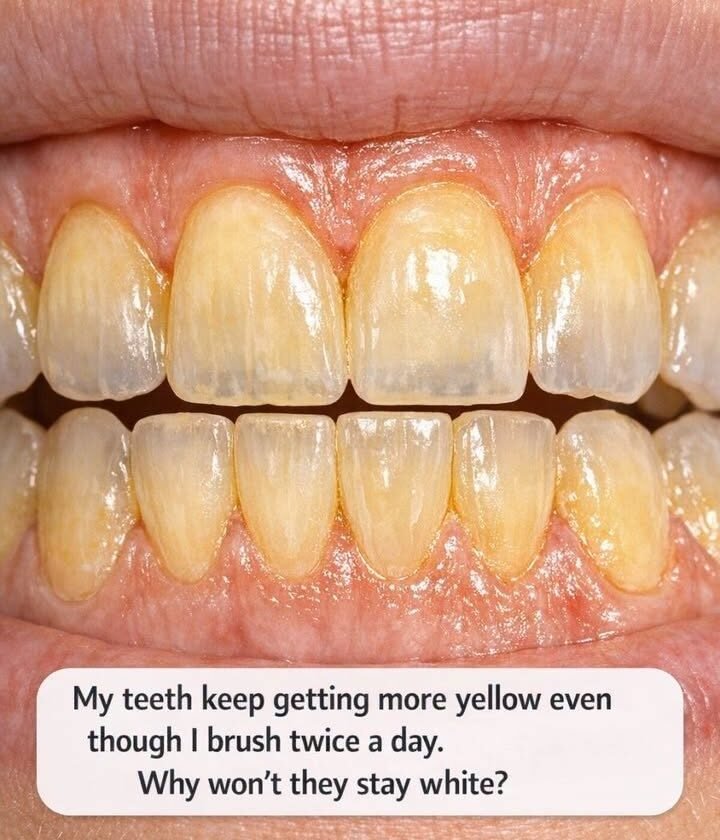
It can be deeply frustrating to brush your teeth twice a day—and practice good oral hygiene—only to watch your smile gradually turn yellow over time.
The reason your teeth aren’t staying blindingly white comes down to a combination of natural tooth anatomy, daily habits, and the physical way teeth stain. Here is why it happens, even when you are diligent with your toothbrush.
The Anatomy of a Tooth (Why Yellow is Natural)
To understand why teeth yellow, it helps to look at what they are made of:
-
Enamel: The hard, outer, white shell of your tooth. Enamel is actually semi-translucent (somewhat see-through).
-
Dentin: The layer directly underneath the enamel. Dentin is naturally a yellowish or yellowish-brown bone-like tissue.
-
The Aging Factor: As you age, daily chewing and normal wear-and-tear gradually thin out your outer enamel layer. As the enamel thins, more of the naturally yellowish dentin shows through, making teeth appear more yellow regardless of how clean they are.
Everyday Culprits That Stain Teeth
Even with regular brushing, several factors continually introduce pigments that bind to your teeth:
-
Chromogens and Tannins in Food and Drink:
-
Dark liquids like coffee, black tea, red wine, cola, and dark juices contain intense pigment molecules called chromogens and tannins. These compounds easily stick to and penetrate the microscopic pores in your tooth enamel.
-
-
Acids That Weaken Enamel:
-
Consuming acidic foods and drinks (like citrus fruits, tomatoes, vinegar dressings, or soda) temporarily softens or demineralizes the outer enamel layer. If you brush immediately after eating or drinking something acidic, you can actually wear away the softened enamel faster.
-
-
Tobacco Use:
-
Nicotine and tar from cigarettes, cigars, or chewing tobacco leave stubborn brownish-yellow deposits that bind tightly to tooth surfaces.
-
-
Genetics:
-
Just like some people naturally have thicker hair or olive skin, the natural thickness, density, and baseline color of your tooth enamel and dentin are largely determined by your genetics. Some people simply have naturally more yellow or translucent teeth.
-
What You Can Do About It
If surface stains are the primary issue, a few adjustments can help protect your smile:
-
Use a Straw: When drinking iced coffee, iced tea, or soda, using a straw minimizes the contact those dark liquids have with your front teeth.
-
Wait After Eating Acids: Instead of brushing immediately after consuming acidic foods, rinse your mouth out with plain water and wait 30 minutes to let your saliva naturally re-harden the enamel before brushing.
-
Professional Dental Cleanings: Routine cleanings by a dental hygienist remove hardened tartar (calculus) and surface stains that regular at-home brushing cannot lift.
-
Consider Whitening Options: Because brushing only cleans surface debris and cannot change the natural, internal color of your dentin, stubborn yellowing caused by aging or genetics typically requires peroxide-based whitening treatments (either professional or over-the-counter) to break down stains deeper within the enamel.