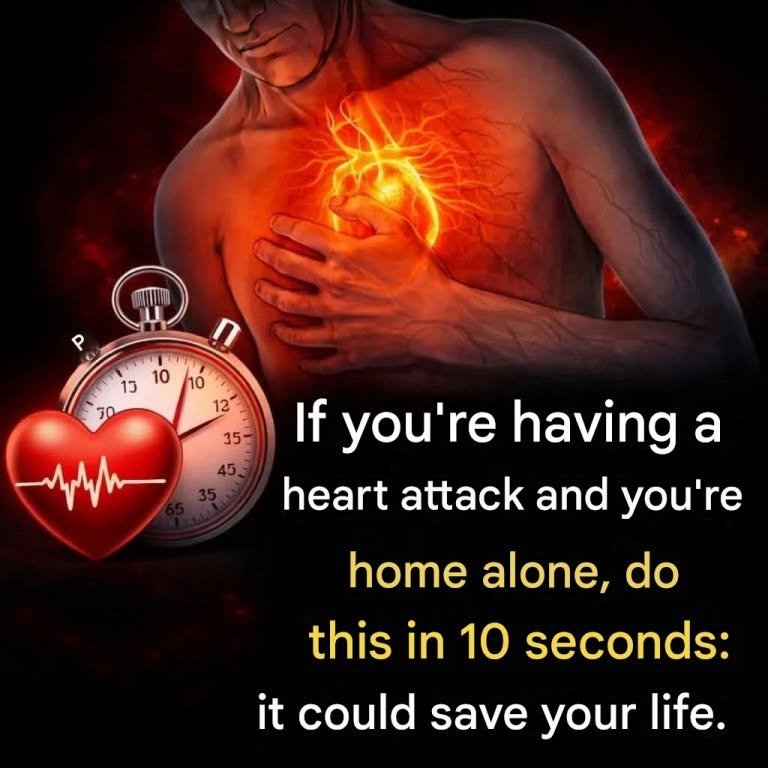
The viral internet claim suggesting you can save yourself from a heart attack at home by doing repeated, forceful coughs (“cough CPR”) is a dangerous medical myth.
Major health organizations, including the American Heart Association, strongly warn against relying on this technique. Here is why it does not work and what you should actually do instead:
Why “Cough CPR” is a Myth
-
Heart Attacks vs. Cardiac Arrest: A heart attack is a circulation problem (usually a blocked artery restricting blood flow to the heart muscle). Coughing cannot clear a blocked artery. Cardiac arrest is an electrical problem where the heart stops beating entirely, at which point a person loses consciousness within seconds and is physically unable to cough.
-
Clinical Context: The concept originates from a strictly controlled hospital environment (like a cardiac catheterization lab) where medical professionals continuously monitor a patient’s heart rhythm on an EKG and might briefly instruct a conscious patient to cough during a sudden, specific heart rhythm glitch. It is not an effective treatment for a heart attack at home.
-
The Danger: Wasting precious seconds trying to cough instead of calling for emergency help can delay critical, life-saving care.
What to Do Instead (If You Suspect a Heart Attack)
If you or someone near you is experiencing symptoms of a heart attack (such as chest pain or pressure, shortness of breath, pain radiating to the arm or jaw, cold sweats, or sudden nausea):
-
Call Emergency Services Immediately: Dial your local emergency number (like 911) right away. Do not wait to see if the symptoms pass.
-
Stay Calm and Rest: Stop what you are doing, sit or lie down in a comfortable position, and try to stay as calm as possible to avoid putting extra strain on your heart.
-
Take Aspirin (If Appropriate): If you are conscious, not allergic, and have not been told by a doctor to avoid aspirin, chewing a regular-strength aspirin can help prevent blood clots from worsening.
-
Unlock the Door: If you are alone, unlock your front door if possible so emergency responders can get to you quickly.