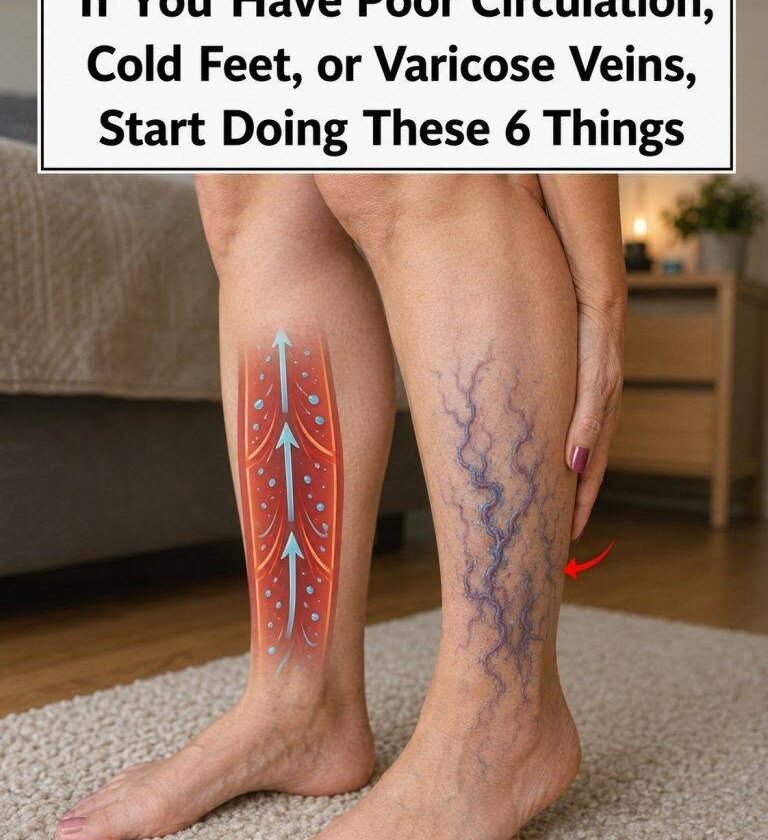
Viral health articles and clickbait wellness blogs love to use dramatic, sweeping hooks like “If You Notice Poor Circulation, Cold Feet, or Varicose Veins: Discover These 6 Everyday Habits That Can Help” to bundle distinct vascular conditions under one catchy headline and promise a simple lifestyle fix.
While bundling cold feet, varicose veins, and poor circulation together makes for great internet reading, clinically speaking, these three issues are quite different—even if they all relate to how blood moves through your body.
Here is what is actually going on beneath the surface, separating the viral hyperbole from evidence-based vascular health.
Sorting Out the Symptoms: Are They All the Same?
-
Cold Feet:
-
The Reality: Chronically cold feet are often just a normal anatomical variation in how your body regulates core temperature (vasoconstriction in the skin to keep vital organs warm). However, if paired with pain or skin changes, it can relate to arterial blood flow.
-
-
Varicose Veins:
-
The Reality: These are swollen, twisted, and enlarged superficial veins that occur when the tiny one-way valves inside your leg veins weaken or fail. This allows blood to pool backward due to gravity (venous insufficiency), rather than flowing smoothly back to the heart.
-
-
Poor Circulation (General):
-
The Reality: A broad term that usually points to either arterial issues (plaque buildup restricting oxygen-rich blood delivery to tissues) or venous issues (inefficient return of blood from the limbs).
-
A single set of 6 daily habits won’t cure damaged vein valves or clear blocked arteries, but everyday movement habits can profoundly support your vascular system and reduce symptoms like swelling and heaviness.
6 Evidence-Based Daily Habits That Actually Support Circulation
Instead of relying on a viral miracle routine, incorporating these grounded, physiological habits into your day helps your body manage blood flow effectively:
-
Keep Your Calf Muscle “Pump” Active
-
Why it works: Your veins don’t have a pump like the heart; they rely on the contraction of your skeletal muscles—especially your calves—to squeeze blood upward against gravity. Regular walking, marching in place, or doing seated calf raises throughout the day actively assists venous return.
-
-
Avoid Prolonged Static Postures (Sitting or Standing)
-
Why it works: Gravity causes blood and fluid to pool in your lower legs when you sit or stand still for hours. Taking a 2-minute movement break every 30 to 60 minutes resets the muscle pump and prevents stasis.
-
-
Elevate Your Legs Periodically
-
Why it works: Lying down and propping your feet up above the level of your heart for 10 to 15 minutes at the end of the day allows gravity to effortlessly drain pooled venous blood and interstitial fluid out of your lower legs.
-
-
Stay Aggressively Hydrated
-
Why it works: Dehydration thickens your blood and reduces overall blood volume, making it harder for your cardiovascular system to efficiently circulate blood to your extremities. Water keeps your blood at an optimal viscosity for smooth flow.
-
-
Consider Gradient Compression Socks (If Recommended)
-
Why it works: For those dealing with varicose veins or leg swelling, medical-grade compression stockings apply gentle, graduated pressure to the lower leg, helping push superficial blood back up toward the deep veins and preventing pooling.
-
-
Manage Blood Pressure and Avoid Smoking
-
Why it works: Nicotine constricts blood vessels and damages endothelial lining, while chronic high blood pressure stiffens arterial walls. Protecting your macrovascular health is the single best way to maintain healthy circulation long-term.
-
When to See a Vascular Specialist
While lifestyle habits are fantastic for daily comfort and prevention, you should consult a doctor or vascular specialist if you notice red flags such as:
-
Asymmetrical swelling (one leg swelling significantly more than the other, which can be a sign of a blood clot or deep vein thrombosis).
-
Non-healing sores or ulcers on your lower legs or feet.
-
Severe, painful varicose veins that ache, burn, or cause skin discoloration and thickening around the ankles.
Skip the clickbait catch-alls—understanding your specific vascular symptoms and maintaining consistent, healthy movement is the real key to keeping your circulation supported!