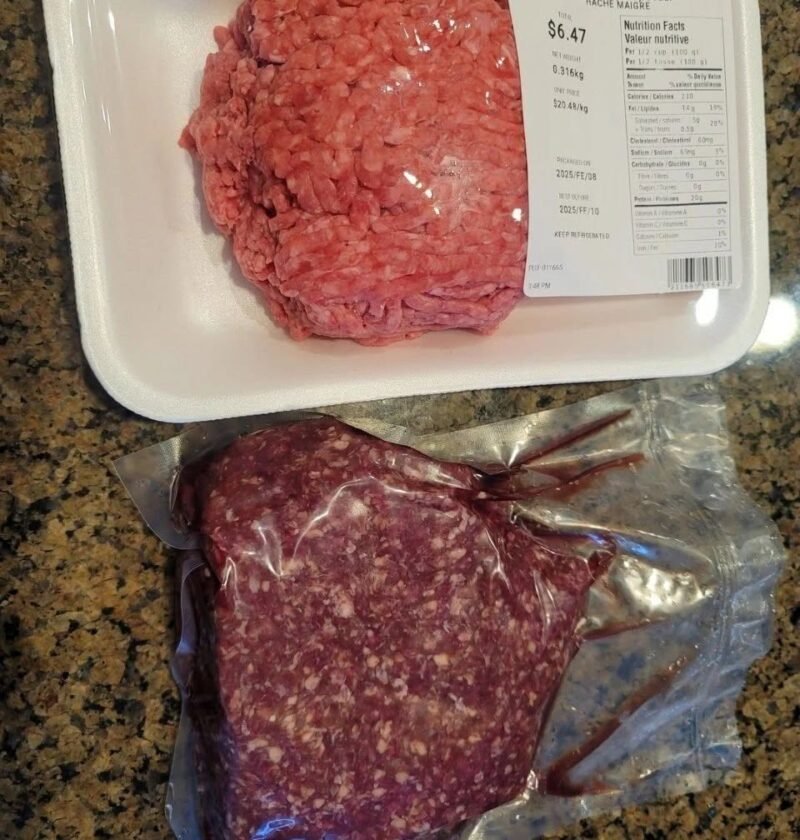
Clickbait grocery store exposés love to tease scary revelations like “They’re selling you meat from…”—usually trying to hook you with dramatic claims about mystery animals, expired meat dyed red, or lab-grown substitutes hidden in the packaging.
While the commercial meat industry certainly has valid discussions surrounding sustainability, factory farming, and labeling practices, commercial grocery store meat is heavily regulated by food safety authorities, not a secret scam.
What the Viral Claims Usually Try to Scare You With
-
“The Meat Is Dyed to Look Fresh” (Modified Atmosphere Packaging):
-
The reality: If you’ve ever noticed how bright red supermarket beef is on top while looking a bit darker underneath, it’s not chemical food coloring. Supermarkets often use Modified Atmosphere Packaging (MAP)—sealing packages with higher levels of oxygen to keep the meat’s myoglobin pigment bright red so it looks appealing to shoppers. It’s a preservation method, not a toxic trick.
-
-
“You’re Eating Animals You Didn’t Bargain For”:
-
The reality: Viral videos love to claim cheap ground meat or restaurant steaks are actually horse meat, rat, or roadkill. In reality, strict government inspections, DNA testing, and traceability laws make large-scale substitution economically and legally unviable for major grocery chains.
-
-
“Injected Water and Preservatives”:
-
The reality: Some raw or enhanced chicken breasts and pork cuts are injected with a solution of saltwater, broths, or phosphates to keep them plump and juicy. While this is real, it’s not a secret poison—it’s explicitly required to be listed on the ingredient label under “contains up to X% added solution.”
-
What You Should Actually Look Out For When Buying Meat
Instead of falling for dramatic internet conspiracy theories about hidden ingredients, the real things food safety experts recommend keeping an eye on are much more practical:
-
Check the Sell-By and Use-By Dates: Always ensure meat is fresh, properly refrigerated, and free of sour odors or unusual stickiness.
-
Understand Labeling Terms: Terms like “grass-fed,” “organic,” or “antibiotic-free” have specific regulatory definitions, whereas vague marketing buzzwords can sometimes be misleading.
-
Proper Handling at Home: Cross-contamination and improper refrigeration in your own kitchen pose a far greater health risk than anything happening at the commercial packing plant.
Are you looking into meat sourcing and sustainability, or trying to find the best ways to select fresh cuts at your local market?