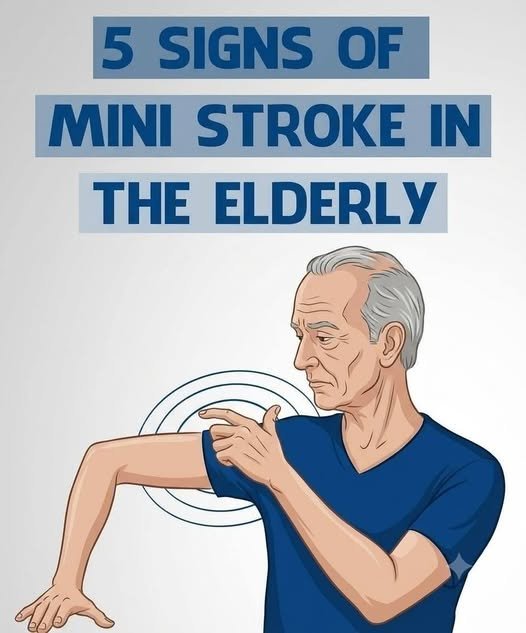
🚨 Mini-Strokes Often Go Unnoticed: 9 Symptoms You Should Never Ignore
A transient ischemic attack (TIA) is sometimes called a “mini-stroke.” Its symptoms can disappear within minutes or hours, but that doesn’t make it harmless. A TIA can be a warning that a major stroke may follow.
9 symptoms to take seriously
- Sudden weakness or numbness
Especially in the face, arm, or leg—particularly on one side of the body. - Facial drooping
One side of the face may suddenly feel weak or appear uneven when smiling. - Sudden trouble speaking
Speech may become slurred, confused, or difficult to produce. - Difficulty understanding speech
Someone may suddenly struggle to understand words or follow a conversation. - Sudden vision changes
This can include loss of vision in one or both eyes, double vision, or significant blurring. - Sudden dizziness or loss of balance
Unexpected difficulty walking, coordination problems, or severe unsteadiness can be a warning sign. - Sudden difficulty walking
New stumbling or inability to coordinate your movements should not be dismissed. - Sudden severe headache
A sudden, unusually intense headache—particularly when accompanied by neurological symptoms—requires urgent attention. - Sudden confusion
An abrupt change in alertness, thinking, or ability to communicate can signal a neurological emergency.
⏱️ Don’t wait for symptoms to disappear
Think B.E. F.A.S.T.:
- B — Balance: sudden loss of balance
- E — Eyes: sudden vision problems
- F — Face: facial drooping
- A — Arms: weakness or numbness
- S — Speech: difficulty speaking or understanding
- T — Time: call emergency medical services immediately
If these symptoms occur, note the time they started and seek emergency medical care immediately—even if they completely disappear.
A TIA cannot reliably be diagnosed at home, and symptoms that seem minor can have important implications for stroke prevention.
🚑 If it’s happening now
Don’t drive yourself and don’t wait to see whether it gets better. Call your local emergency service. Rapid evaluation can help determine whether the event was a TIA or stroke and identify treatments that may reduce the risk of another event.
The key message: A “mini-stroke” isn’t something to ignore because the symptoms went away. Temporary neurological symptoms can be an emergency warning.