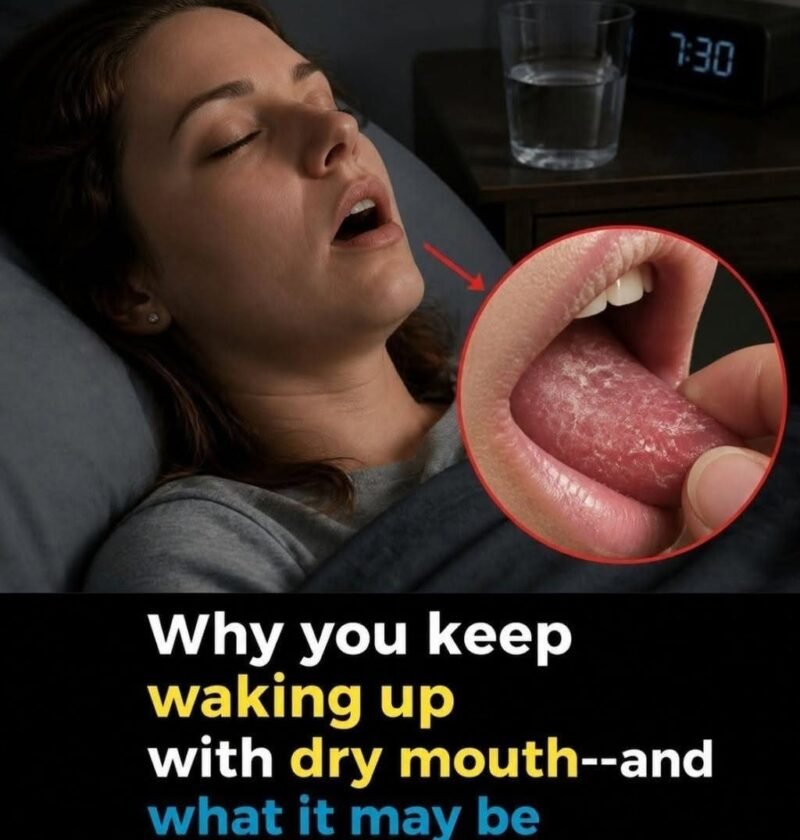
Waking up with a dry mouth is common, and it doesn’t necessarily mean something is seriously wrong. It can happen for several reasons.
What morning dry mouth can mean
- Breathing through your mouth while sleeping — often from a blocked nose, allergies, congestion, or sleeping with your mouth open.
- Dehydration — not drinking enough fluids during the day, sweating, or simply going many hours without drinking overnight.
- Snoring or sleep apnea — persistent morning dry mouth, especially with loud snoring, gasping during sleep, morning headaches, or daytime sleepiness, can be a clue.
- Medications — many medicines can reduce saliva, including some antihistamines, antidepressants, blood-pressure medicines, and decongestants.
- Alcohol or tobacco use — both can contribute to dry mouth.
- High blood sugar — persistent thirst and frequent urination along with dry mouth can occur with diabetes.
- Mouth or dental problems — reduced saliva increases the risk of cavities, gum disease, bad breath, and difficulty swallowing.
What you can try
- Drink adequate water during the day.
- Treat nasal congestion if you have it.
- Avoid excessive alcohol and tobacco.
- Consider a humidifier if your bedroom air is very dry.
- Maintain good dental hygiene.
- Don’t routinely use sugary drinks or candy to relieve dry mouth.
If the dryness is persistent for several weeks, is getting worse, or comes with excessive thirst, frequent urination, difficulty swallowing, mouth sores, or significant snoring/daytime sleepiness, it’s worth discussing with a doctor or dentist.
And if you wake up with severe dry mouth plus choking/gasping or pauses in breathing during sleep, ask specifically about sleep apnea.