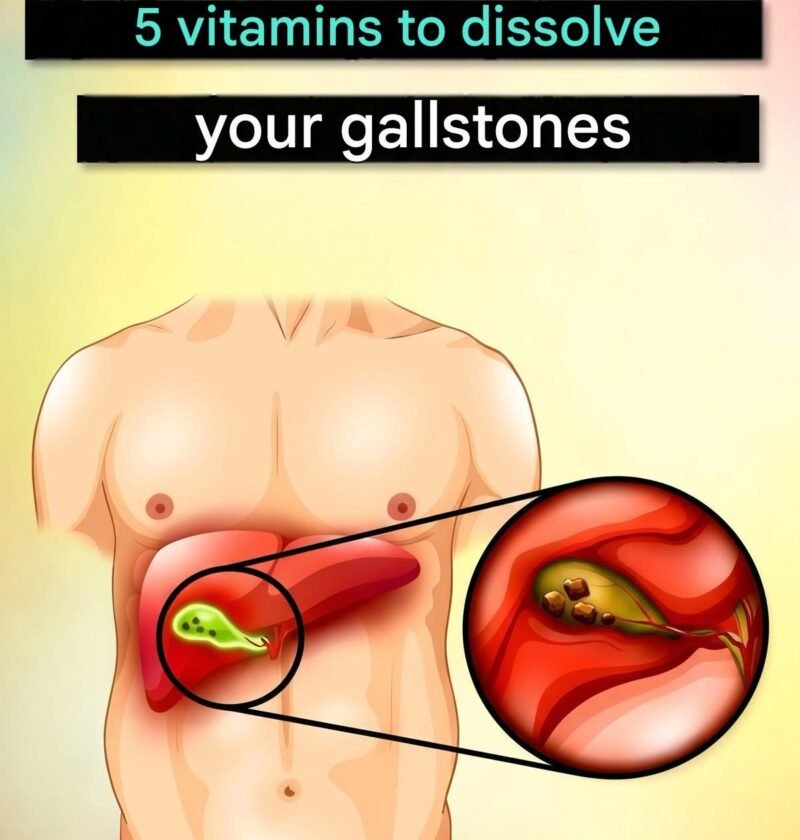
The claim that specific vitamins can “dissolve” gallstones is a popular wellness myth. Once gallstones—which are hardened deposits of digestive fluid, mostly made of cholesterol or bilirubin—form inside your gallbladder, no vitamin, supplement, or herbal remedy can safely melt or dissolve them.
While certain dietary shifts and medical treatments can manage symptoms or prevent new stones from forming, established gallstones typically require medical intervention if they cause blockages or pain.
Why Vitamins Cannot Dissolve Gallstones
Marketing claims online often recommend high doses of vitamins (like Vitamin C or lecithin) to clear gallstones, but the physiological reality is different:
-
Structural Composition: Cholesterol stones form over time as cholesterol crystallizes in stagnant bile. They are not like mineral buildup in pipes that can be washed away with a chemical solvent or vitamin.
-
The Limitations of Ursodiol: In conventional medicine, doctors occasionally prescribe a specific prescription bile acid called ursodiol (UDCA) to slowly dissolve small, cholesterol-based gallstones. However, this process takes many months or years, has a high recurrence rate, and only works in very specific, carefully screened patients—it is a prescription medication, not a vitamin.
What Vitamins Actually Do for Gallbladder Health
While vitamins won’t dissolve existing stones, ensuring adequate nutrition plays a key role in supporting overall gallbladder function and reducing your risk of developing stones in the first place:
-
Vitamin C (Antioxidant Support): Some observational studies suggest that adequate Vitamin C levels are linked to a lower risk of gallstone formation, as Vitamin C helps the body convert cholesterol into bile acids. However, taking mega-doses won’t eliminate stones already present.
-
Healthy Fats & Lecithin: While not a vitamin, lecithin (a phospholipid) is often touted alongside supplements to help keep bile fluid. Healthy fats in general (like olive oil and omega-3s) are essential because they prompt the gallbladder to contract regularly, preventing bile from stagnating.
When Gallstones Become Dangerous
Many people have gallstones without ever knowing it (known as “silent stones”). However, you should seek immediate medical attention if you experience a gallbladder attack (biliary colic), which includes:
-
Sudden, rapidly intensifying pain in the upper right or center of your abdomen.
-
Pain that radiates to your right shoulder or between your shoulder blades.
-
Nausea and vomiting.
-
Yellowing of your skin and eyes (jaundice) or a fever with chills, which can indicate an infection or a blocked bile duct.
If gallstones cause recurrent pain or complications, the standard and most effective medical solution is typically a cholecystectomy (surgical removal of the gallbladder), a routine procedure that the body tolerates very well.