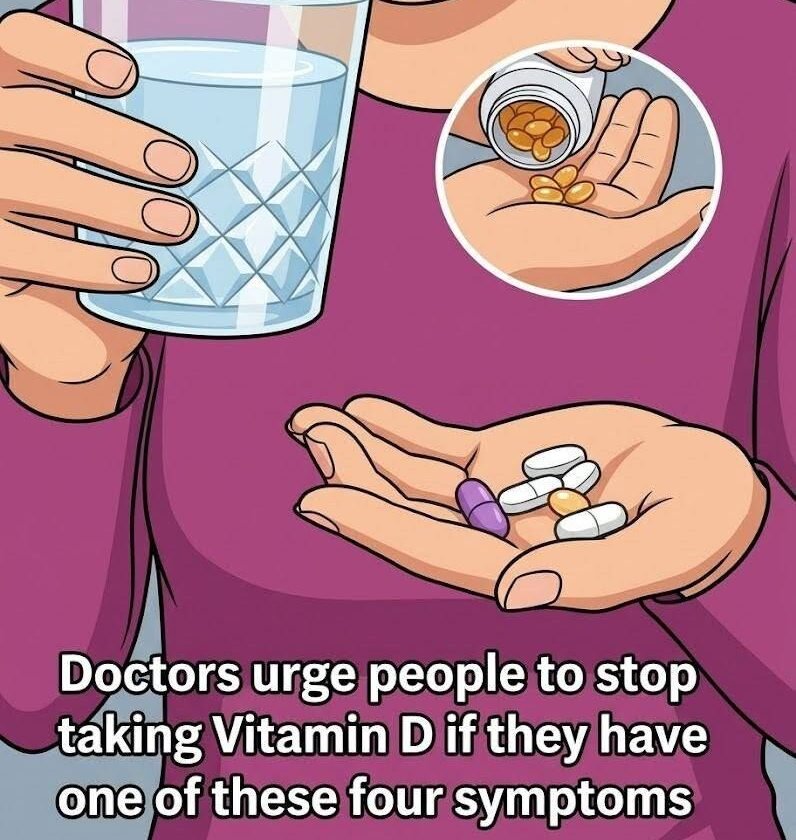
That headline—“Important Warning from Doctors: Stop Taking Vitamin D Immediately If You Have These 4 Symptoms”—is a textbook fear-mongering health clickbait formula. It takes a legitimate medical nuance (supplement side effects) and wraps it in a panic-inducing command to create an artificial emergency.
While vitamin D is widely praised as the “sunshine vitamin” and essential for bone health and immune function, the internet loves to swing between extremes: either telling everyone to double their dose or warning that a standard supplement is quietly poisoning them.
The physiological reality is much simpler: Vitamin D is fat-soluble, meaning your body stores excess amounts rather than flushing them out in your urine like water-soluble vitamins (such as Vitamin C). If you take massive, unmonitored doses over a long period, it can lead to a condition called vitamin D toxicity (hypervitaminosis D), which causes calcium to build up in your bloodstream.
The Real Symptoms of Too Much Vitamin D
When doctors warn about vitamin D overload, they aren’t talking about standard daily doses (like 1,000 to 2,000 IU) or getting safe amounts from sunlight and food. Toxicity almost exclusively happens from taking extremely high-dose supplements (often 10,000+ IU daily for months) without blood tests.
If someone develops hypervitaminosis D, the resulting hypercalcemia (high blood calcium) typically triggers specific physical warning signs:
-
Gastrointestinal Distress (Nausea, Vomiting, Poor Appetite): Excess calcium in the blood can upset your digestive tract, leading to persistent nausea, a sudden lack of appetite, or constipation.
-
Frequent Urination and Extreme Thirst: When your blood calcium levels spike, your kidneys have to work overtime to filter and process the excess mineral, leading to frequent trips to the bathroom and intense dehydration.
-
Muscle Weakness and Fatigue: High calcium levels can disrupt normal neuromuscular function and electrical impulses in your body, leaving you feeling profoundly fatigued, weak, or mentally sluggish.
-
Bone Pain and Kidney Stones: Ironically, while vitamin D is supposed to build strong bones, too much of it pulls calcium out of your bones and dumps it into your soft tissues and bloodstream. This can cause bone pain and increase the risk of forming painful calcium-based kidney stones.
What You Should Actually Do
If you are taking a standard daily supplement and feel fine, you are almost certainly not experiencing toxicity. However, because vitamin D levels vary wildly from person to person depending on skin tone, geographic location, and genetics, the only way to know your true status is a simple 25-hydroxyvitamin D blood test ordered by your doctor.
If your levels are low, your physician can guide you on the exact, safe therapeutic dose—saving you from guessing or falling for dramatic internet warnings.