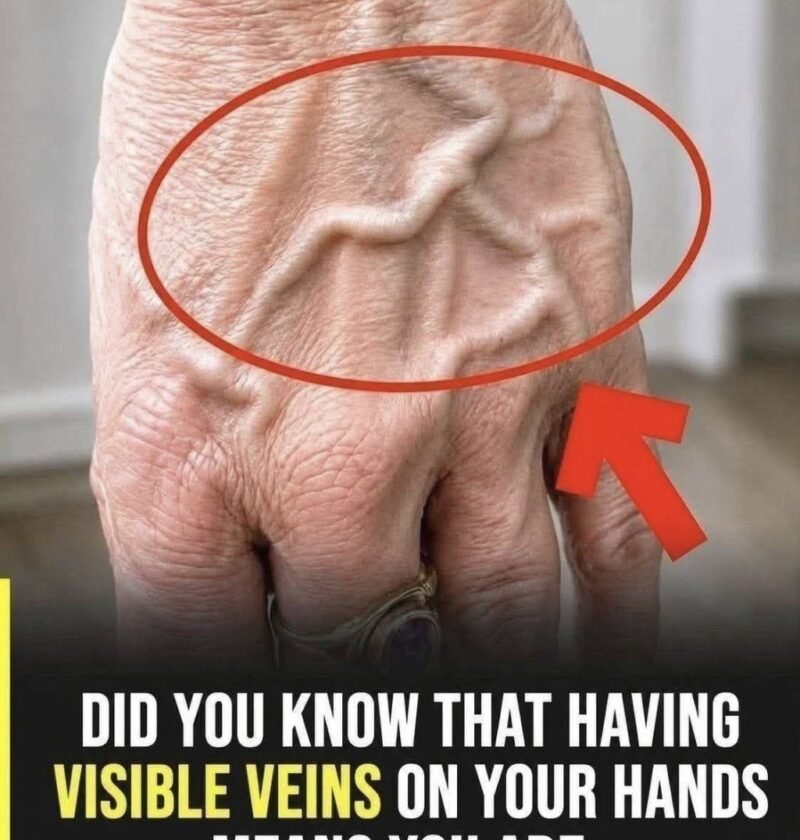
That trailing ellipses—“Did you know that having visible veins means you are… See more”—is the classic cliffhanger designed to stop you scrolling and make you click out of pure curiosity.
Internet wellness and aesthetic articles love to diagnose visible veins as either a terrifying medical red flag or a quirky sign of elite fitness, depending on what they’re trying to sell you.
The physiological reality is much more ordinary: having visible veins is completely normal and depends almost entirely on your body composition, genetics, and anatomy rather than a single secret condition.
Why Are Veins Visible in the First Place?
Your veins are the blood vessels responsible for returning deoxygenated blood back to your heart. Whether or not they show through your skin comes down to a few very straightforward biological factors:
-
Body Fat Percentage: This is the #1 reason veins show. Everyone has a network of veins right beneath their skin. If you have a lower overall body fat percentage, there is less subcutaneous fat acting as a cushion and blanket over those blood vessels, making them naturally more prominent (especially on the hands, arms, and legs).
-
Skin Thickness and Transparency: Fair or thin skin naturally reveals underlying structures much more easily than thicker or more pigmented skin. As we age, our skin naturally thins and loses collagen, which can make hand and arm veins more noticeable even if nothing else has changed.
-
Genetics and Anatomy: Some people are simply born with superficial vein networks that sit closer to the surface of the skin, or with naturally larger vein structures.
-
Temporary Pressure and Heat: When you exercise, your body pumps more blood to your muscles, causing veins to dilate (expand). Hot weather does the exact same thing to help your body cool down. Temporary spikes in blood pressure (like heavy lifting or straining) can also make veins bulge momentarily.
When Visible Veins Do Warrant Attention
While cosmetic or fitness-related vein visibility is entirely harmless, there is a medical exception: varicose veins.
If veins in the legs become twisted, enlarged, bulging, and dark purple or blue, it indicates that the tiny one-way valves inside the veins have weakened. Instead of pushing blood smoothly back up to the heart, blood pools in the lower legs. This can cause aching, heaviness, swelling, or restless legs, and is worth mentioning to a doctor.
So, if your veins are popping out after a workout, showing up more as you age, or just part of your natural look, you aren’t harboring a mysterious medical secret—you’re just looking at human biology!