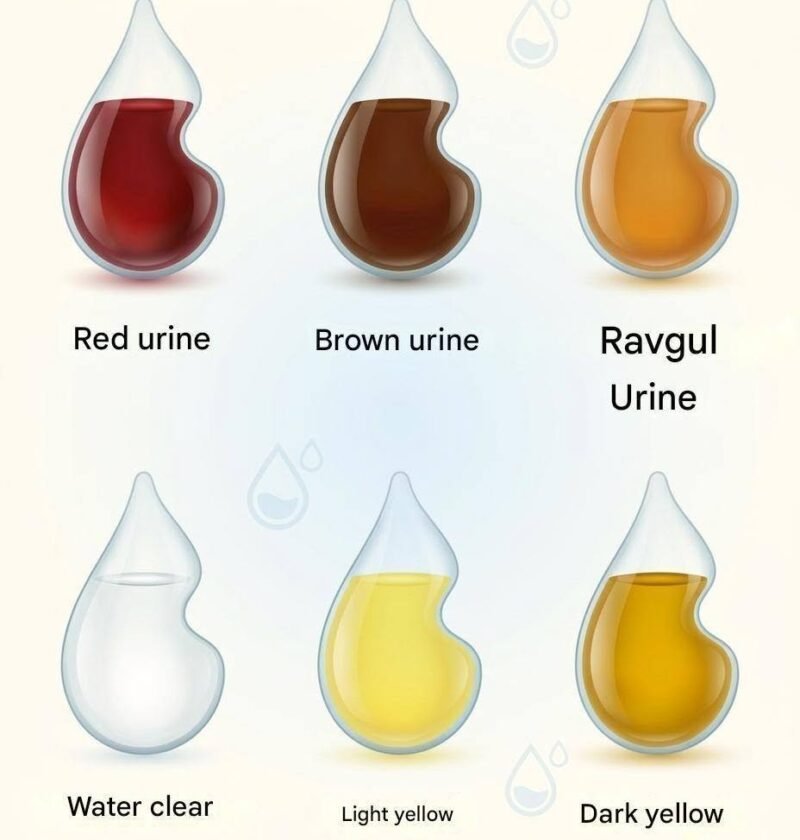
Urine color can provide some clues about hydration and health, but color alone can’t diagnose a disease.
💧 What different colors can mean
- Pale yellow: Usually a sign of adequate hydration.
- Dark yellow/amber: Often means your urine is concentrated, commonly from not drinking enough fluids.
- Completely clear: You may be drinking more water than you need. Constantly producing very clear urine along with excessive thirst or frequent urination is worth discussing with a clinician.
- Pink or red: Can result from foods such as beets, but it can also indicate blood in the urine. Unexplained red or pink urine should be medically evaluated.
- Orange: Can occur with dehydration or certain medications, but persistent orange urine warrants evaluation.
- Blue or green: Uncommon; certain medications, dyes, or infections can sometimes cause this color.
- Brown or cola-colored: May occur with severe dehydration, certain medications, liver problems, or muscle breakdown and should be evaluated promptly if unexplained.
- Cloudy or milky: Can be caused by crystals, urinary infection, or other substances.
🚨 When to seek medical care
Don’t rely on urine color alone. Blood in the urine, brown/cola-colored urine, persistent cloudiness, pain when urinating, fever, back/flank pain, or significant changes in how much you urinate should be assessed by a healthcare professional.
Also, vitamins—particularly B-complex supplements—can turn urine bright yellow, which is usually harmless.
The best indicator of hydration isn’t a particular “perfect” shade of yellow; thirst, fluid intake, and your overall health matter too.