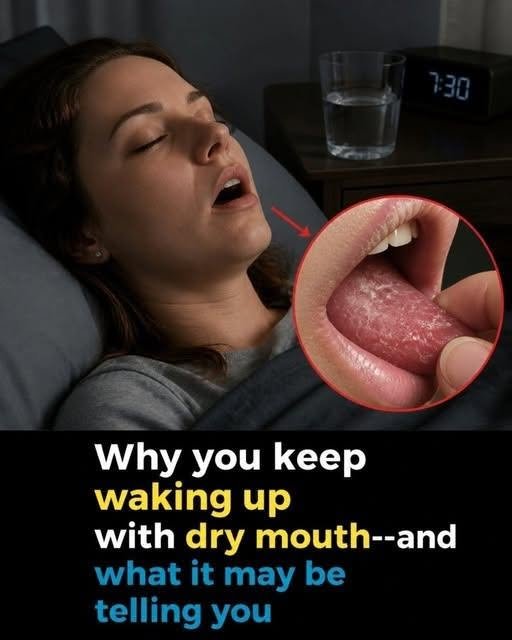
Waking up with a dry mouth is common and usually doesn’t mean something is seriously wrong. It generally means your mouth didn’t have enough saliva during sleep.
Common reasons
- Sleeping with your mouth open: Nasal congestion, allergies, or a blocked nose can make you breathe through your mouth.
- Dehydration: Not drinking enough fluids during the day can contribute.
- Snoring or sleep apnea: Repeated mouth breathing can leave your mouth extremely dry.
- Medications: Many antihistamines, antidepressants, decongestants, blood-pressure medicines, and other drugs can reduce saliva.
- Alcohol, tobacco, or caffeine: These can worsen dryness in some people.
- Dry bedroom air: Air conditioning or heating can contribute.
- Diabetes or other medical conditions: Persistent excessive thirst and urination along with dry mouth warrant medical evaluation.
What you can do
Drink enough water during the day, keep your bedroom comfortably humidified if the air is dry, address nasal congestion, and maintain good oral hygiene. Don’t stop a prescribed medication just because you suspect it is causing dry mouth.
If dry mouth happens almost every morning for weeks, is accompanied by loud snoring/gasping, extreme daytime sleepiness, persistent thirst, frequent urination, difficulty swallowing, or recurrent mouth infections, talk with a healthcare professional or dentist.
Chronic dry mouth matters because reduced saliva can increase the risk of tooth decay and gum disease, so persistent symptoms shouldn’t simply be ignored.