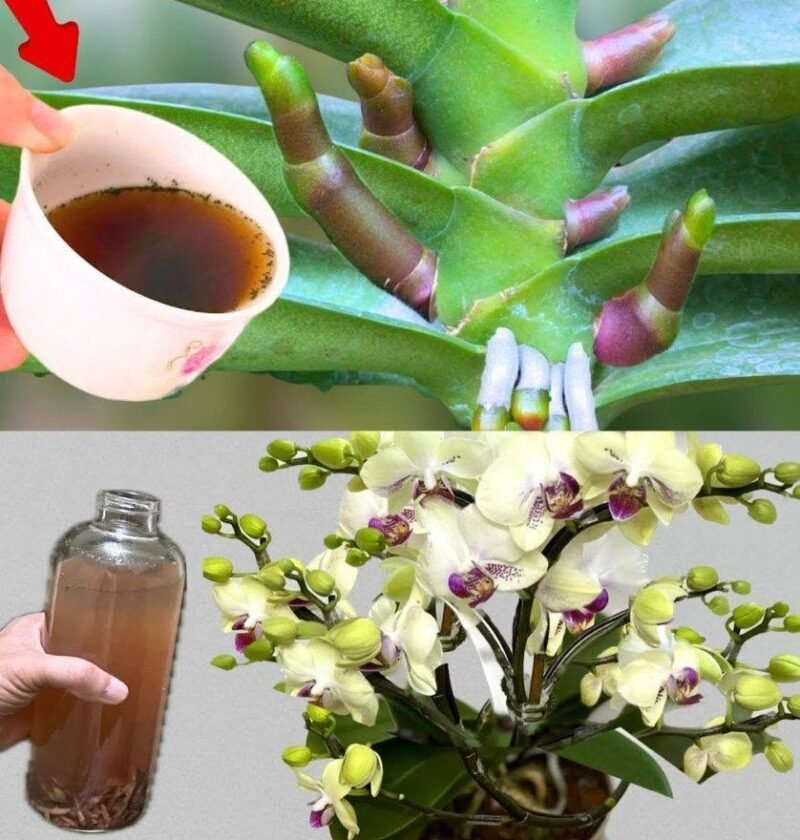
When people talk about viral “miracle waters” or secret kitchen concoctions to make a leafy orchid explode with growth and blooms (like garlic water, rice water, banana peel tea, or diluted Epsom salts/cinnamon water), they are usually chasing a burst of natural nutrients like potassium, phosphorus, or mild anti-fungal properties.
However, when it comes to orchids—especially a very leafy Phalaenopsis or tropical variety—there is a major catch behind these internet hacks.
The Reality Behind DIY Orchid Waters
-
The Claim: Organic mixtures (like boiling banana peels or soaking rice) release starches, vitamins, and minerals that supposedly trigger massive root development and non-stop flowering.
-
The Risk: Pouring organic starches or food-based liquids (like rice or garlic water) directly onto orchid potting media or roots can backfire severely. Organic residues feed bacteria and fungus, invite gnats, and can cause root rot or sour the bark medium.
What Actually Makes a Leafy Orchid Thrive 10x Better
If your orchid is putting out lots of lush, green leaves but refusing to flower—or you just want to maximize its health—it doesn’t need a viral internet trick. It needs the right environment and precise care:
-
The Right Temperature Drop (The Real Trigger): For leafy tropical orchids like Phalaenopsis to produce a flower spike, they usually need a slight, natural cue: a minor drop of about 10°F (5°C) between daytime and nighttime temperatures for a couple of weeks during the fall or winter.
-
Balanced Orchid Fertilizer (Weakly, Weekly): Instead of unpredictable DIY kitchen mixtures, use a commercial, water-soluble orchid fertilizer (such as a 20-20-20 or a bloom-booster formula high in phosphorus) diluted to quarter-strength. Feed them weakly every time you water during their growing season.
-
Maximum Ambient Light (Without Direct Sun): Leafy orchids love bright, indirect light. If they are sitting in a dim corner, they will grow plenty of leaves because they are trying to capture light, but they won’t have the energy required to push out blooms.
-
Proper Root Aeration: Orchids are epiphytes (growing on trees in nature, not in heavy soil). Their roots need air. Ensure they are planted in loose bark or sphagnum moss inside a clear pot with plenty of drainage holes, and only water them when the roots turn a silvery-gray (meaning they are dry), rather than keeping them constantly soggy.