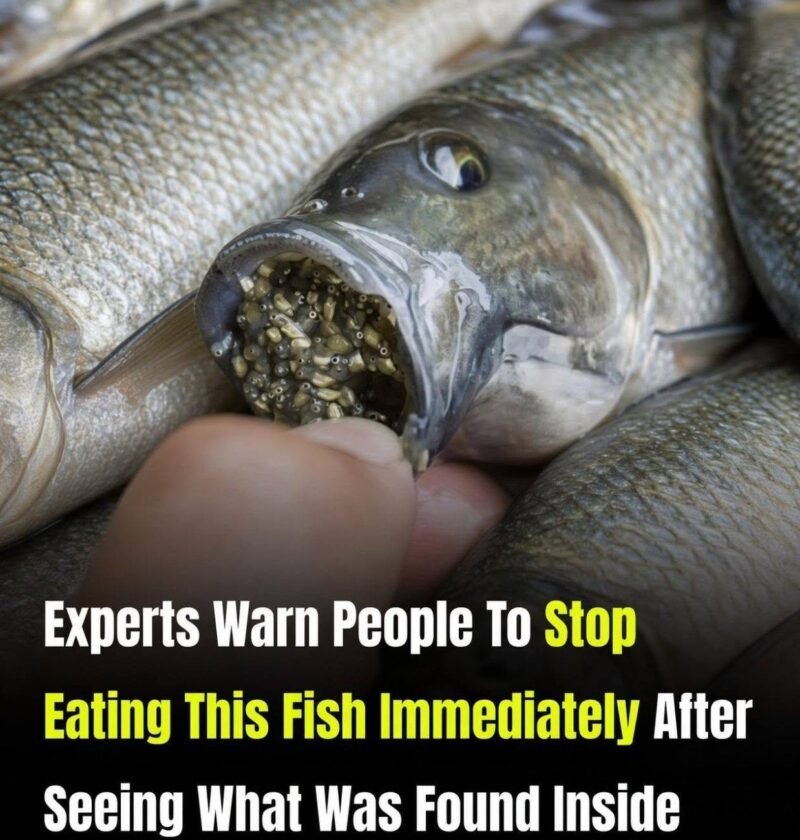
When people think about healthy eating, fish is almost always at the top of the list. Packed with lean protein, heart-healthy omega-3 fatty acids, and essential vitamins, it is a dietary staple worldwide.
However, depending on which fish you are regularly bringing home, you might be getting a lot more than you bargained for—ranging from invisible environmental toxins to mislabeled species at the seafood counter.
1. The Heavy Metal Accumulation (The Biomagnification Trap)
The most surprising hidden element in popular fish isn’t an additive; it’s a pollutant: methylmercury.
-
The Problem: Industrial pollution releases mercury into the air, which eventually settles into oceans, rivers, and lakes. Microorganisms convert it into methylmercury, which is absorbed by tiny aquatic plants and animals.
-
The Food Chain Effect: Small fish eat these organisms, and larger predatory fish eat thousands of those smaller fish over their lifespans. Because mercury binds tightly to muscle tissue and cannot be cooked, cleaned, or washed out, it accumulates.
-
The Culprits: Apex predators like swordfish, shark, king mackerel, marlin, orange roughy, and bigeye/bluefin tuna carry the highest concentrations. Eating them frequently can lead to mercury accumulation in the human body, which poses risks to the nervous system, especially for pregnant individuals and young children.
2. The Great Seafood Substitution (Mislabeled Species)
If you think you are buying premium fish, studies often show a surprising reality: you might be eating something entirely different.
-
The Problem: Seafood fraud—where cheaper or less-desirable fish are deliberately mislabeled as high-value species—is surprisingly common in global supply chains.
-
The Culprits: DNA testing of sushi rolls, restaurants, and grocery store fillets frequently reveals that budget-friendly whitefish like swai or tilapia are sold as higher-end snapper or grouper, or that escolar (a fish known for causing digestive distress if eaten in large quantities) is marketed as “white tuna” or “butterfish.”
3. Microplastics and Synthetic Pollutants
Beyond heavy metals, our oceans are saturated with microscopic synthetic debris, and popular commercial fish are paying the price.
-
The Problem: Plastics break down into microplastics and absorb chemical pollutants like PCBs (polychlorinated biphenyls) and pesticides from the water.
-
Where it goes: These particles are ingested by marine life. While studies show that humans typically eat the flesh of the fish (where microplastics rarely accumulate in large amounts compared to the digestive tract), chemical pollutants that bind to fat tissue can still be passed up the food chain.
How to Navigate It Safely
You don’t need to cut fish out of your diet—the cardiovascular and brain-boosting benefits of omega-3s are immense. Instead, choose strategically:
-
Go for the “Little Guys”: Smaller, short-lived fish lower on the food chain—such as sardines, anchovies, trout, and wild-caught salmon—are exceptionally low in mercury and packed with nutrients.
-
Watch Your Tuna Types: If you love tuna, swap out bigeye or high-end ahi steaks for canned light tuna (skipjack), which generally contains significantly lower mercury levels than albacore or bigeye varieties.
-
Limit Apex Predators: Reserve fish like swordfish or shark for rare occasions rather than making them a weekly menu staple.