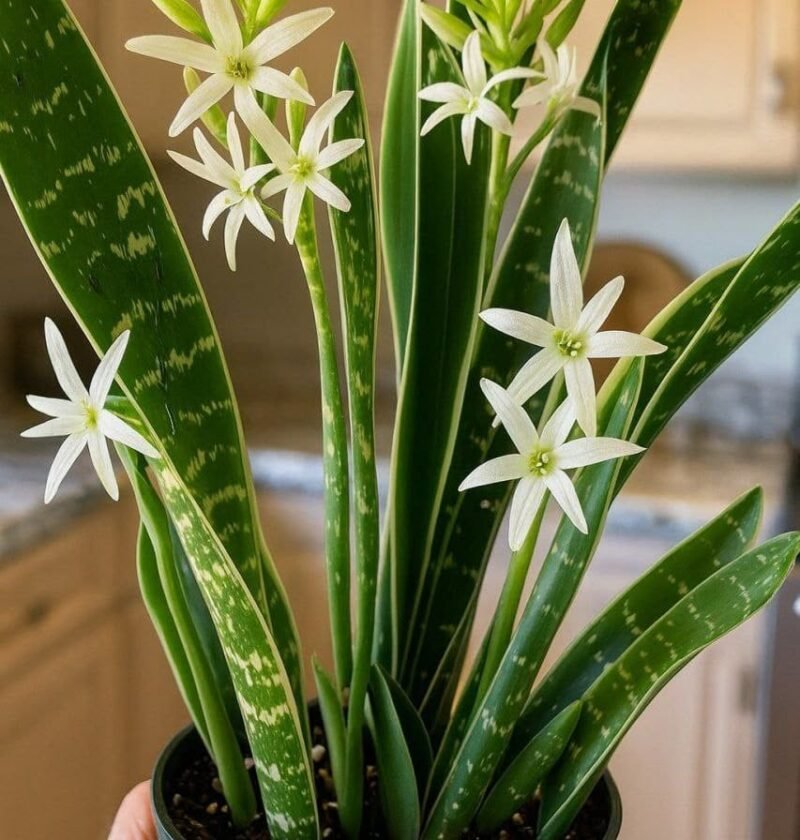
The Mother-in-Law’s Tongue (scientifically known as Sansevieria or Dracaena trifasciata, and more commonly called the Snake Plant) is celebrated for being virtually indestructible. It purifies the air, tolerates low light, and survives on total neglect.
However, many people don’t know that they actually bloom! When they do, they send up a tall, delicate stalk covered in tiny, greenish-white or cream-colored tubular flowers that secrete sticky, sweet droplets of nectar and release an intoxicating, vanilla-jasmine-like fragrance that can perfume an entire room—especially at night.
Getting one to flower is a rare treat, but you can coax them into it by mimicking their native, stress-induced growing conditions.
The Secret: Stress and Maturity
In the wild, Snake Plants only bloom when they feel their survival is slightly threatened or when they have reached a specific stage of maturity. They won’t flower if they are pampered with too much water and constant shade. To trigger a bloom, you have to lean into “tough love.”
4 Steps to Encourage Your Snake Plant to Bloom
-
Root-Bound is Best (Do Not Repot Too Soon):
-
Why it works: Snake plants actually love being slightly root-bound. When their roots run out of room and crowd the pot, the plant shifts its energy away from root expansion and toward reproduction (flowering).
-
The Tip: Keep your plant in a snug pot. If it’s been in the same container for 3 to 4 years and is bursting at the seams, it’s a prime candidate for blooming.
-
-
Give It Bright, Indirect (or Even Direct) Light:
-
Why it works: While they survive in dark corners, they will never bloom there. In nature, they bake under bright tropical sun.
-
The Tip: Move your plant to a spot where it receives several hours of bright, indirect sunlight—such as an east- or west-facing window. A little bit of gentle morning direct sun can work wonders.
-
-
Practice Strict “Drought Stress”:
-
Why it works: Simulating a dry season tricks the plant into thinking it needs to reproduce before conditions get too harsh.
-
The Tip: Allow the soil to dry out completely for several weeks between waterings. Water deeply, and then let it dry out completely again. Never let water sit in the saucer.
-
-
Feed Sparingly with the Right Nutrients:
-
Why it works: Too much nitrogen will just give you lush, green leaves. To encourage flowers, the plant needs a boost of phosphorus and potassium.
-
The Tip: Once a month during spring and summer, feed it a diluted, low-nitrogen fertilizer (or use a splash of that potassium-rich banana peel water we talked about earlier!).
-
What to Expect When It Blooms
-
The Fragrance: The scent is heaviest in the evening and at night, filling the room with a rich, sweet perfume.
-
The Nectar: The blooms produce sticky droplets of nectar. If you have a blooming stalk, you might want to place a small plate or napkin underneath to catch any sweet drips on your furniture or floors.
-
Enjoy It While It Lasts: The flowers typically last for a couple of weeks before fading away. Once the show is over, you can trim the spent flower stalk cleanly at the base to redirect the plant’s energy back into its striking leaves.
Do you currently have a Mother-in-Law’s Tongue at home, and how long has it been hanging out in its current pot?