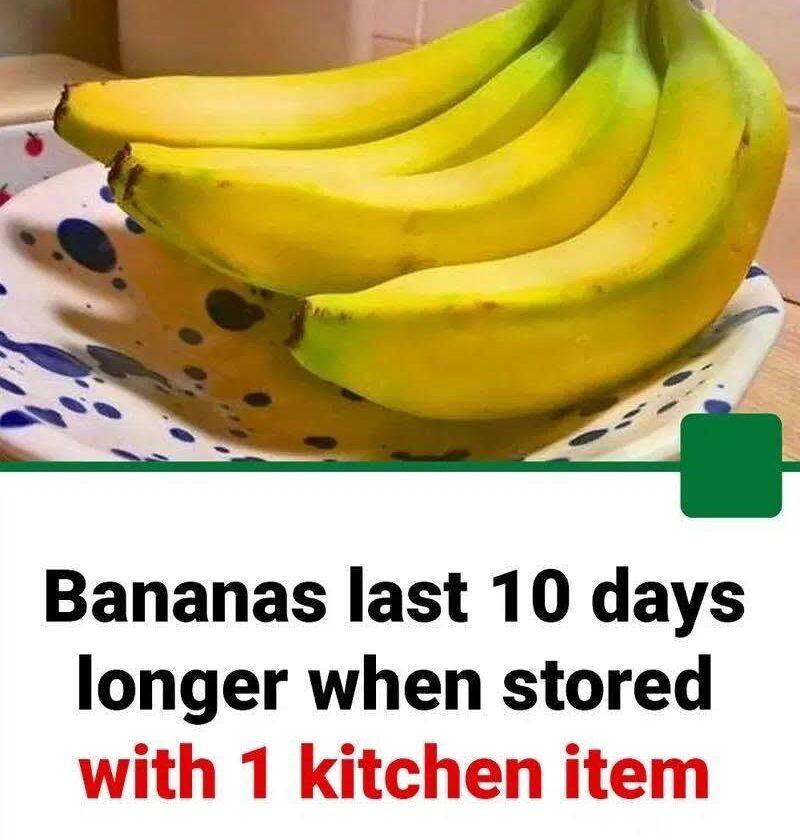
The “one kitchen item” is most likely plastic wrap (cling film)—used to cover the banana stems.
How it works
Bananas naturally produce ethylene gas, a plant hormone that speeds up ripening. The stem/crown is an important source and pathway for ethylene release.
-
Wrap the crown/stems tightly with a small piece of plastic wrap.
-
Keep the bananas at room temperature while they are still green/yellow and you want them to continue ripening.
-
Wrapping the stems can slow the ripening process, although it won’t stop it.
-
Keep bananas away from other ethylene-producing fruit, such as apples, pears and avocados, if you want them to last longer.
What about the “10 days longer” claim?
That number should be treated cautiously. There isn’t a universal 10-day extension—how long bananas last depends heavily on their starting ripeness, temperature, humidity and variety. Stem-wrapping can slow ripening, but saying it will reliably add exactly 10 days is an exaggeration.
A fruit bowl can also accelerate ripening if it contains other ethylene-producing fruits. Once bananas are fully ripe, putting them in the refrigerator can extend their usable life; the peel may turn dark, but the fruit inside can remain good for several more days.
Practical approach: buy slightly green bananas → separate them if desired → wrap the stem/crown → keep them away from ripening fruit → refrigerate once they reach your preferred ripeness.