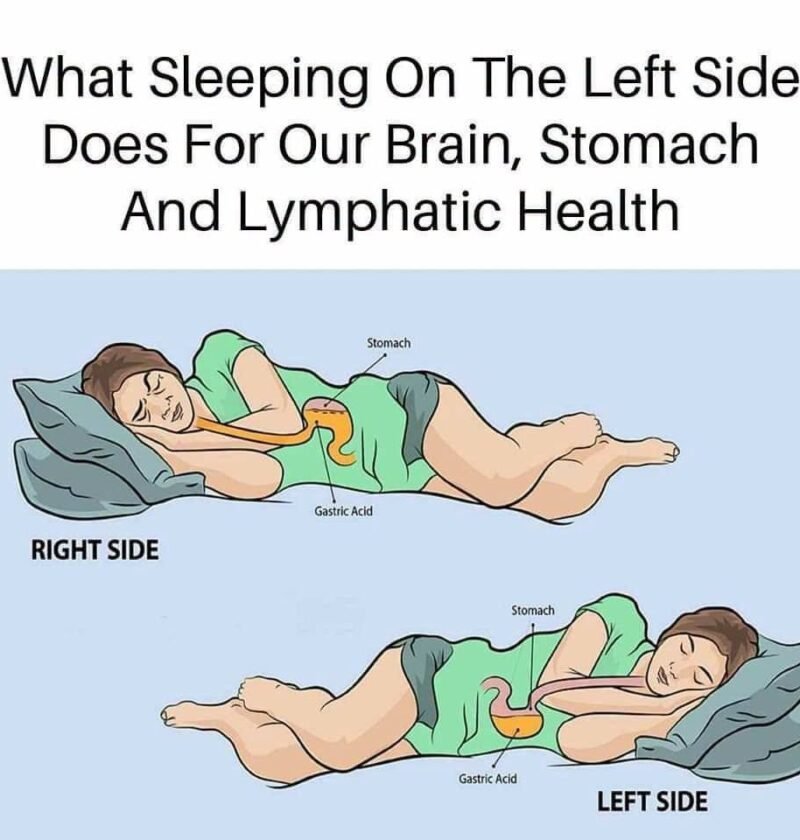
The best sleep position for feeling great the next day
There isn’t one universally “best” sleeping position. The right position depends on your body and any health conditions you have. For most healthy adults, however, side sleeping is a strong all-around choice.
🛌 1. Side sleeping — a good default
Sleeping on your side can:
- Help keep the airway more open, potentially reducing snoring and obstructive sleep apnea compared with back sleeping.
- Reduce symptoms of acid reflux when you sleep on your left side.
- Be comfortable for people with certain types of back or hip discomfort when the spine is properly supported.
Try placing a pillow between your knees and using a pillow that keeps your head and neck aligned rather than tilted upward or downward.
😴 2. Back sleeping
Back sleeping can be excellent for spinal alignment, particularly when you use a supportive pillow and, if comfortable, a small pillow under your knees.
However, it can make snoring and sleep apnea worse in some people because the tongue and soft tissues can fall backward more easily.
🤰 3. During pregnancy
Side sleeping is generally preferred later in pregnancy. A pillow between the knees or a pregnancy pillow can make it considerably more comfortable. If you’re pregnant, your obstetric clinician can advise you about the safest position for your particular situation.
What about stomach sleeping?
It’s generally not the first choice because keeping your head turned to one side for hours can strain the neck, and the position can make maintaining a neutral spinal posture more difficult.
The bigger secret to feeling great
Your sleeping position matters, but sleep duration, consistency, mattress/pillow comfort, temperature, and treating problems such as sleep apnea or chronic pain can matter even more.
Bottom line: If you don’t have a specific medical reason to choose otherwise, try side sleeping with your neck and spine comfortably aligned. If you snore heavily, wake up choking/gasping, or remain exhausted despite adequate sleep, don’t simply change positions—consider discussing sleep apnea with a healthcare professional.