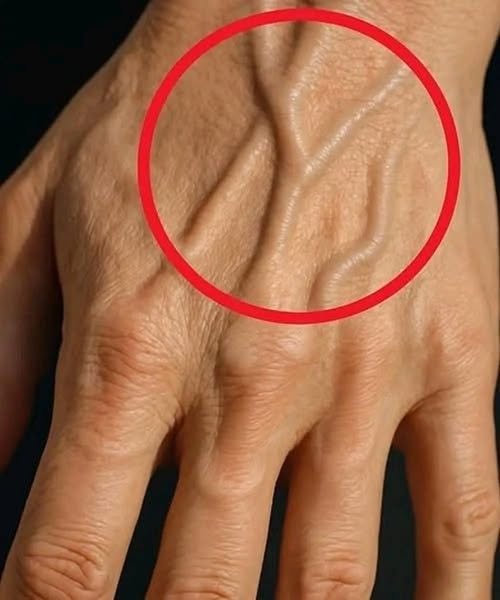
Viral health videos love to take completely normal physical traits—like visible veins—and frame them as a sign of hidden disease or a mysterious vitamin deficiency.
In reality, having visible veins is overwhelmingly normal. Whether your veins stand out like a roadmap or stay completely hidden beneath your skin has very little to do with a secret health crisis and almost everything to do with basic biology and physics.
Why Are Veins Visible? (The Real Explanations)
If you’ve recently noticed your veins more prominently, it usually comes down to one of these common factors:
-
Low Body Fat Percentage: Fat acts as a natural insulating layer beneath the skin. If you have a lower body fat percentage, there is simply less tissue between your skin and your blood vessels, making your veins much easier to see. This is why athletes and very fit individuals often have highly visible veins.
-
Thin or Fair Skin: Fair skin has less melanin, making underlying blood vessels show through with much higher contrast. Additionally, as people age, skin naturally thins and loses collagen and elasticity, which often makes veins on the hands, arms, and legs more prominent.
-
Hydration and Blood Volume: When you are well-hydrated, your total blood volume increases slightly, which can cause veins to plump up and push closer to the surface.
-
Heat and Temperature: When your environment is warm, your body undergoes vasodilation—your blood vessels expand to help release heat and cool you down. This expansion brings veins closer to the skin’s surface. (Conversely, cold temperatures cause them to constrict and hide).
-
Genetics: Just like some people naturally inherit freckles or curly hair, many people simply inherit thin skin or superficial vein patterns from their parents.
When Should You Pay Attention to Visible Veins?
While normal visible veins are harmless, there are specific situations where prominent veins point to an actual medical condition that a doctor should evaluate:
-
Varicose Veins: If the veins in your legs become visibly swollen, twisted, bulging, or rope-like, it is often due to venous insufficiency—a condition where the tiny one-way valves inside the veins weaken, causing blood to pool backward rather than flowing smoothly up to the heart. This can cause aching, heaviness, or swelling in the legs.
-
Spider Veins: These are tiny, damaged capillaries that appear close to the surface of the skin in web-like patterns. While usually cosmetic, they can sometimes be associated with underlying vein reflux.
-
Sudden, Painful Bulging: If a vein suddenly becomes hard, tender, red, or painful to the touch, it can indicate superficial phlebitis (inflammation of a vein) or a small blood clot, which requires medical attention.
The Bottom Line
If your veins are simply visible under your skin and you feel fine, it’s just your anatomy at work. There is no magical “two-ingredient tea” or supplement that will make them disappear.
Have you noticed a sudden change in your veins recently, or did a dramatic social media post make you wonder about your circulation?