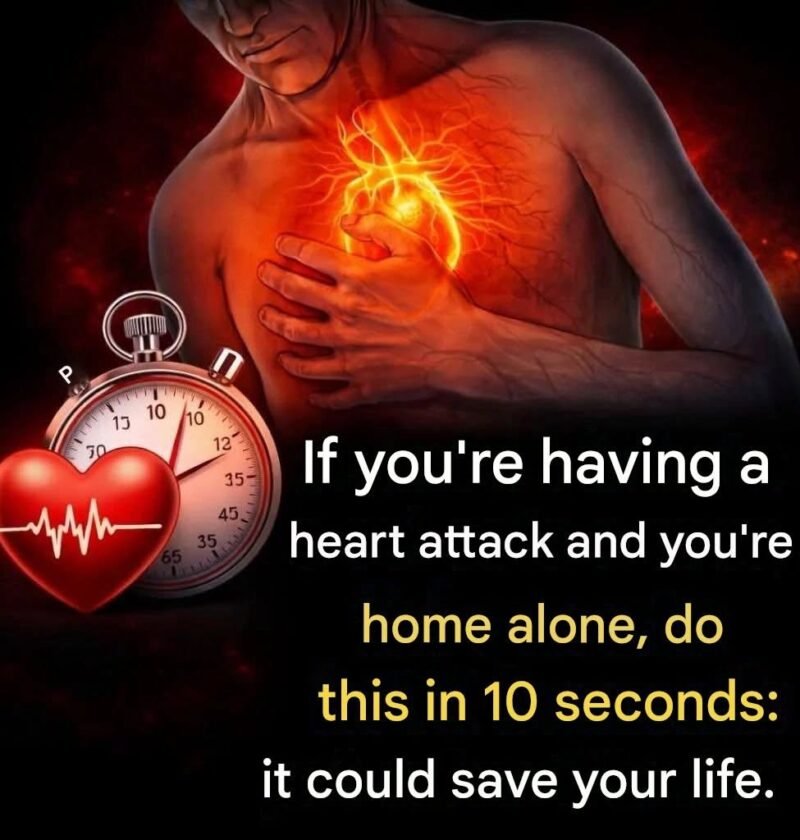
That viral claim—often advising people to perform aggressive, forceful coughing (sometimes called “cough CPR”) repeatedly if they feel a heart attack coming on alone—is not only false, but it can be dangerous.
Social media posts frequently package this as a secret “10-second hack” to survive a cardiac emergency. In reality, medical organizations like the American Heart Association (AHA) explicitly warn against relying on cough CPR when you are alone and experiencing a true heart attack.
Why the “Cough Hack” Doesn’t Work for Heart Attacks
-
The Confusion: “Cough CPR” is a real, highly specialized technique sometimes used in a hospital setting for a matter of seconds while a patient is hooked up to a continuous ECG monitor under direct medical supervision, specifically during a sudden arrhythmia (like ventricular fibrillation) where the heart momentarily stops beating.
-
The Reality of a Heart Attack: A typical heart attack (myocardial infarction) is usually caused by a blocked coronary artery cutting off blood flow to part of the heart muscle. The heart is still beating, but it is in distress or failing. Forceful coughing will not open a blocked artery, nor will it restart a stopped heart. In fact, hacking and coughing violently raises your blood pressure and places massive, unnecessary stress on an already struggling heart.
What You Should Do If You Suspect a Heart Attack at Home
If you or someone around you experiences warning signs of a heart attack (such as severe chest pressure, pain radiating down the arm or jaw, sudden shortness of breath, cold sweats, or lightheadedness), every second counts. Skip the internet hacks and take these immediate steps:
-
Call Emergency Services (911 or your local emergency number) Immediately: Do not try to drive yourself to the hospital, and do not wait to see if the pain passes. Paramedics can begin life-saving treatment the moment they arrive.
-
Chew Aspirin (If Advised and Safe): If you are not allergic and have no history of severe bleeding disorders, chewing and swallowing a regular-strength aspirin can help stop blood platelets from clumping further around a blockage. (Always confirm with emergency dispatchers if you are unsure).
-
Unlock Your Front Door: If you are home alone, unlock your door and stay near the phone or lie down on the floor where emergency responders can easily reach you if you lose consciousness.
-
Stay Calm and Rest: Sit down, loosen any tight clothing, and try to keep your heart rate as low as possible while you wait for help.
Have you or someone you know recently come across one of these viral medical myths online, or were you looking up emergency preparedness information?