When your heart is struggling or facing underlying issues, it rarely stays completely silent. While movies often portray heart trouble as a sudden, dramatic clutch of the chest, real-world cardiovascular problems often start with subtle, persistent, or unusual warning signs that your body is under stress.
Recognizing these signals early can make all the difference. Here are key signs that your heart may not be right and deserves immediate attention:
1. Unusual Shortness of Breath (Dyspnea)
-
What it feels like: Catching your breath after climbing a flight of stairs is normal. But if you find yourself gasping for air after minimal exertion—like walking across a room, carrying light groceries, or even while resting flat on your back—it’s a red flag.
-
Why it happens: When the heart muscle weakens or stiffens (as in heart failure or coronary artery disease), it cannot pump blood efficiently. This causes blood and fluid to back up into the lungs, making breathing difficult.
2. Persistent Fatigue or Exhaustion
-
What it feels like: A bone-deep tiredness that doesn’t improve with a full night’s sleep. You might feel too exhausted to complete routine daily tasks that used to be easy.
-
Why it happens: When your heart’s pumping capacity drops, your body reroutes vital, oxygen-rich blood away from less essential areas (like muscles and limbs) to protect the brain and heart. This leaves the rest of your body starved for energy.
3. Chest Discomfort, Pressure, or Tightness
-
What it feels like: It isn’t always a sharp pain. Many people describe it as a heavy pressure, a squeezing sensation, fullness, burning, or an uncomfortable tightness in the center or left side of the chest that may come and go or last for more than a few minutes.
-
Why it happens: This typically signals that a section of the heart muscle isn’t receiving enough oxygen-rich blood due to blocked or narrowed coronary arteries.
4. Heart Palpitations or Irregular Rhythms
-
What it feels like: Your heart feels like it is racing, pounding, fluttering, or skipping beats. You might feel “thumps” in your chest or throat, even when you are completely at rest.
-
Why it happens: While harmless skipped beats can happen due to stress or caffeine, persistent or erratic rhythms (like atrial fibrillation) indicate that the heart’s electrical system is misfiring, putting you at higher risk for stroke.
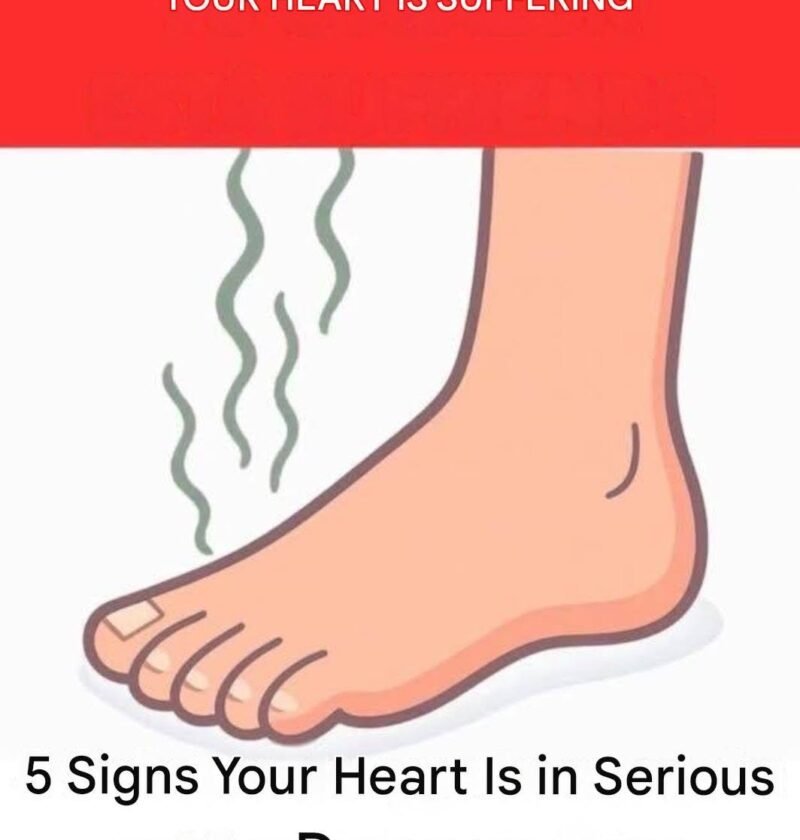
5. Swelling in the Feet, Ankles, or Legs (Edema)
-
What it feels like: Puffy lower legs, shoes suddenly feeling too tight, or leaving a noticeable indent when you press your thumb into your skin (pitting edema).
-
Why it happens: When the heart is failing to pump blood effectively forward, fluid backs up in the circulatory system. Gravity pulls this excess fluid downward into the lower extremities.
6. Dizziness, Lightheadedness, or Fainting
-
What it feels like a: Sudden feeling of unsteadiness, wooziness, or blacking out (syncope) when standing up too quickly or even while sitting still.
-
Why it happens: If the heart pumps too weakly or beats too fast/slow, blood pressure drops sharply, depriving the brain of adequate blood flow and oxygen.
7. Discomfort Radiating to Other Areas
-
What it feels like: Pain, aching, or numbness that spreads from the chest outward—frequently into the left arm, shoulder, jaw, neck, upper back, or stomach.
-
Why it happens: Nerves running from the heart share pathways with nerves in the upper body, causing the brain to misinterpret where the distress signal is coming from.
🚨 EMERGENCY WARNING: Call emergency services immediately if you experience sudden, crushing chest pressure, severe shortness of breath, sudden cold sweats, or pain radiating down your arm or jaw. These are classic signs of an active heart attack.
Have you or someone you know been experiencing any of these subtle or persistent cardiovascular warning signs lately?