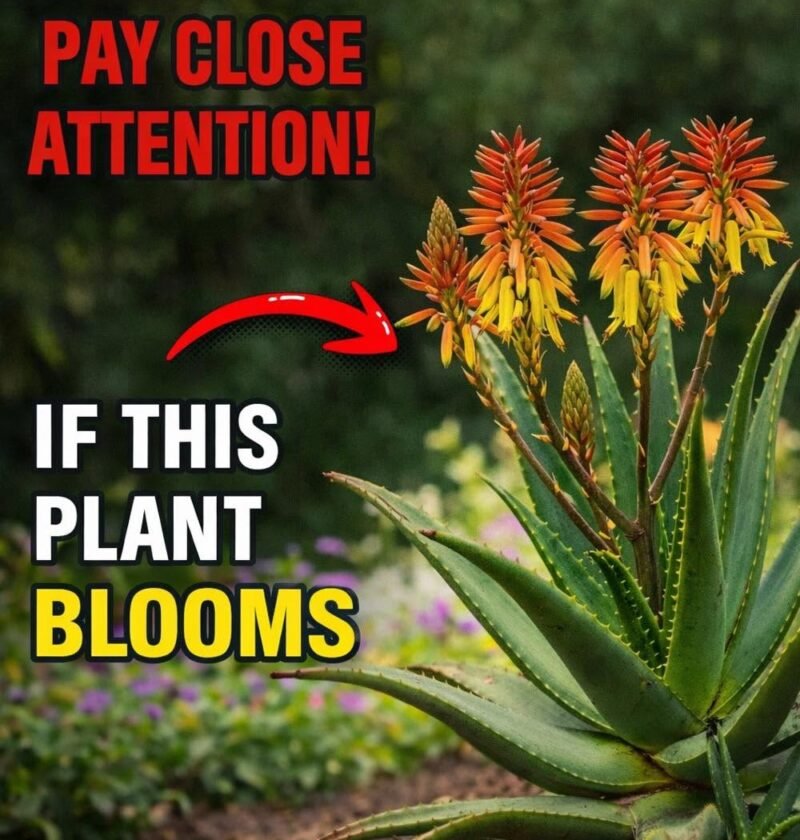
The “mystery” of why indoor aloe vera plants rarely bloom—and why seeing one flower feels like a rare event—comes down to a very specific sequence of environmental triggers that modern indoor homes almost never replicate.
In the wild (native to the Arabian Peninsula and arid regions), aloe vera plants bloom regularly in the late spring, shooting up a tall, striking stalk of tubular yellow or orange flowers. Indoors, however, they can go decades without flowering.
The blooming mystery is solved by understanding the exact combination of signals the plant needs:
1. The Winter “Rest” (Dormancy Trigger)
The single most important catalyst for aloe blooming is a cool winter rest period. In nature, temperatures drop during winter nights (ideally to 10°C to 15°C / 50°F to 60°F).
-
The Indoor Problem: Centrally heated homes maintain a steady, warm climate year-round (68°F–72°F). Without that chilly cue, the aloe never realizes it has cycled through a winter, failing to trigger the hormonal shift needed for reproduction.
2. Photoperiod and Intense Light Energy
Producing a massive flower spike that can grow several feet tall requires an enormous amount of stored energy.
-
The Indoor Problem: Even a bright windowsill usually only provides a fraction of the raw light intensity and duration that an outdoor plant gets. Aloes typically need 6 to 8 hours of direct sunlight daily. Without it, the plant’s “energy budget” is only large enough for basic survival and leaf growth, leaving zero surplus for flowers.
3. Strict Drought Cues
In its native habitat, winter brings significantly reduced rainfall. Combined with the cool temperatures and shortening daylight hours, this drought signal tells the plant: “Winter is here; prepare to bloom and set seeds as soon as spring warmth arrives.”
-
The Indoor Problem: Houseplants are often watered on a regular, consistent schedule year-round, which disrupts this natural hormonal trigger.
4. Plant Maturity
An aloe will never bloom young. It must reach physical maturity—typically at least 3 to 4 years old (and possessing a robust rosette of 12 to 15 well-developed leaves) before it even has the physiological capacity to transition into a flowering phase.
How to Unlock the “Mystery” at Home
If you want to trick an indoor aloe vera into blooming, you have to mimic nature’s strict checklist:
-
Give it a summer vacation: Move the plant outdoors into full sun once the threat of frost has passed. This builds up its critical energy reserves.
-
Simulate winter: In late autumn, move the plant to a cooler, frost-free room (like an unheated spare room, bright garage, or enclosed porch) where temperatures stay around 50°F to 60°F.
-
Put it on a drought diet: Drastically cut back on watering through the winter months (once every 4 to 6 weeks is plenty).
Note: Unlike some plants that die after flowering (monocarpic plants), aloe vera is completely safe and will continue to grow normally after its spectacular bloom fades.