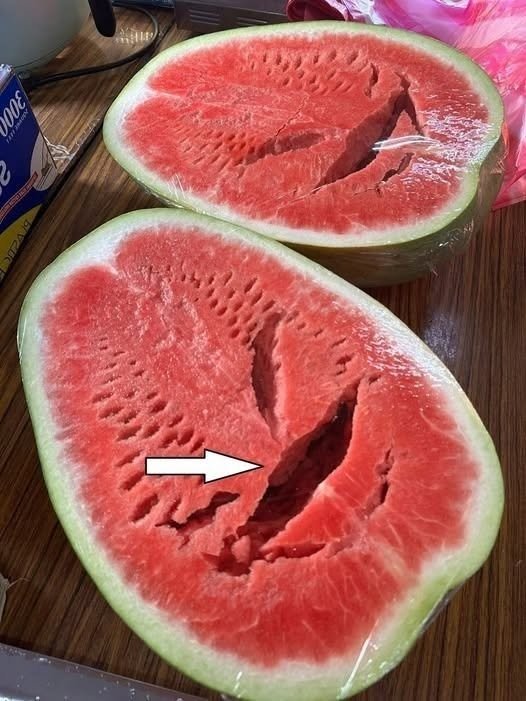
🍉 Cracks Inside a Watermelon: Should You Stop Eating It?
Not necessarily. Cracks inside a watermelon don’t automatically mean it’s unsafe to eat.
If you cut one open and see hollow areas, splits, or cracks in the flesh, this can happen from growing conditions, including irregular water availability and rapid fruit growth. Some internal cracking can occur while the melon still looks normal on the outside.
What to check before eating it
- Smell it: A sour, fermented, or otherwise unpleasant smell is a reason to discard it.
- Look at the flesh: Avoid watermelon with widespread mushiness, sliminess, mold, or unusual discoloration.
- Feel the texture: Fresh watermelon should be firm and juicy. Soft, slimy flesh is a warning sign.
- Consider how it was stored: Cut watermelon should be refrigerated promptly and not left at room temperature for extended periods.
- When in doubt, throw it out: Don’t taste food to determine whether it’s spoiled.
What about a perfectly fresh watermelon with internal cracks?
If the flesh is firm, smells fresh, and shows no signs of spoilage, an internal crack by itself isn’t a reason to assume the watermelon is dangerous.
So the viral advice “cracked watermelon = poisonous, stop eating immediately” is not accurate. The important question is whether the fruit shows signs of spoilage or has been improperly stored, not simply whether it has a crack.