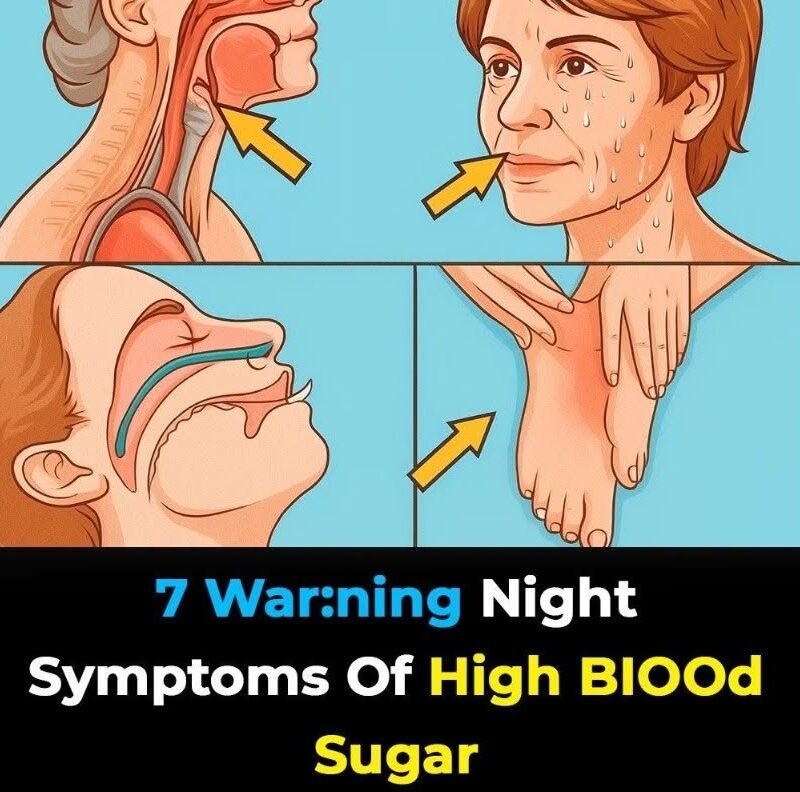
7 Nighttime Signs of High Blood Sugar
High blood sugar (hyperglycemia) doesn’t always cause obvious symptoms, and nighttime symptoms aren’t specific enough to diagnose it by themselves. However, these signs can be worth paying attention to—especially if they occur repeatedly.
- Frequent nighttime urination — excess glucose in the blood can cause the kidneys to pull more water into the urine.
- Intense thirst or a dry mouth — increased urination can lead to dehydration.
- Night sweats — sweating isn’t a reliable sign of high blood sugar and can have many other causes, so check your glucose rather than assuming.
- Restless or disrupted sleep — thirst, urination, or glucose fluctuations can interfere with sleep.
- Morning headaches or feeling unusually tired — poor sleep or overnight glucose abnormalities can contribute.
- Blurred vision — elevated glucose can temporarily affect the eye’s focusing system.
- Itching or recurrent infections — high glucose can contribute to some skin or genital infections, although these symptoms aren’t necessarily worse at night.
Don’t diagnose from symptoms alone
If you have diabetes, checking your blood glucose with your meter or continuous glucose monitor is much more useful than trying to identify high sugar from symptoms.
If you’re repeatedly very thirsty, urinating frequently, losing weight without trying, or experiencing persistent fatigue or blurred vision, arrange a medical check and ask about blood-glucose testing.
Seek urgent medical care for very high glucose accompanied by vomiting, severe abdominal pain, deep/rapid breathing, marked drowsiness, confusion, or inability to keep fluids down—these can be signs of a dangerous metabolic emergency.