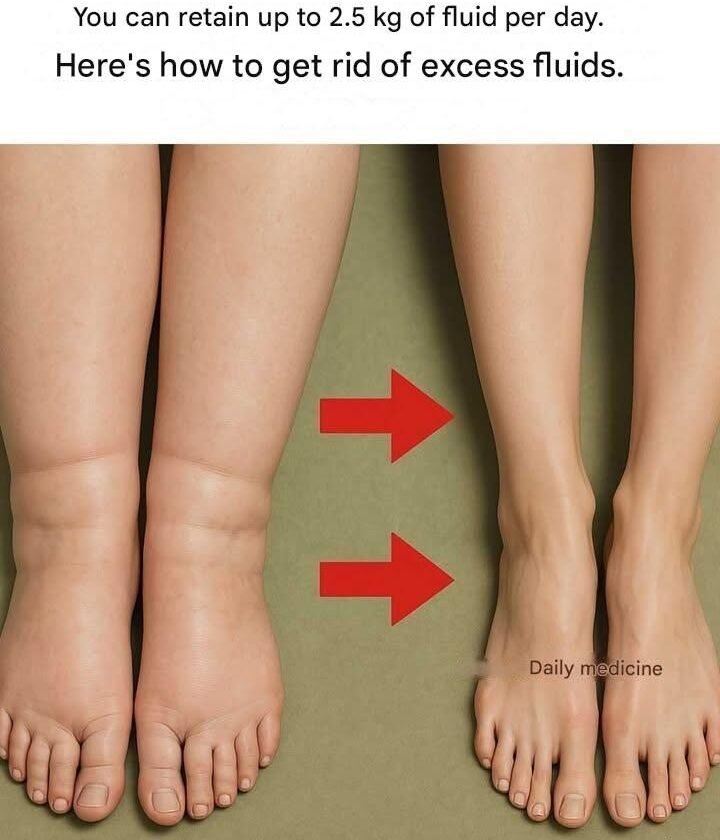
That claim is misleading. Your body can experience day-to-day changes in water weight, sometimes by several kilograms, but saying you routinely “retain up to 2.5 kg of fluid per day” is not a reliable medical rule. Rapid changes on the scale are often influenced by salt and carbohydrate intake, hormones, hydration, bowel contents, and activity.
Why you may feel or look “puffy”
Temporary fluid retention can happen after:
- Eating a very salty meal
- Consuming more carbohydrates than usual
- Hormonal changes, including around menstruation
- Sitting or standing for long periods
- Hot weather
- Some medications
How to reduce ordinary bloating or water retention
- Return to your normal balanced diet rather than severely restricting food or water.
- Moderate your intake of very salty processed foods.
- Drink fluids according to thirst; don’t deliberately dehydrate yourself.
- Stay physically active and avoid prolonged sitting.
- Get adequate sleep.
Avoid “water-loss” teas, extreme fasting, or taking diuretics (“water pills”) just to make the scale drop. They can cause dehydration and dangerous electrolyte disturbances.
When swelling needs medical attention
Persistent or unexplained swelling—particularly in the legs, abdomen, or face—can sometimes be associated with heart, kidney, liver, thyroid, or vein problems.
Sudden swelling of one leg, especially with pain or warmth, or swelling accompanied by chest pain or shortness of breath, requires urgent medical assessment.
So, a sudden increase in weight isn’t automatically “2.5 kg of excess fluid,” and there isn’t a safe universal recipe for eliminating it.