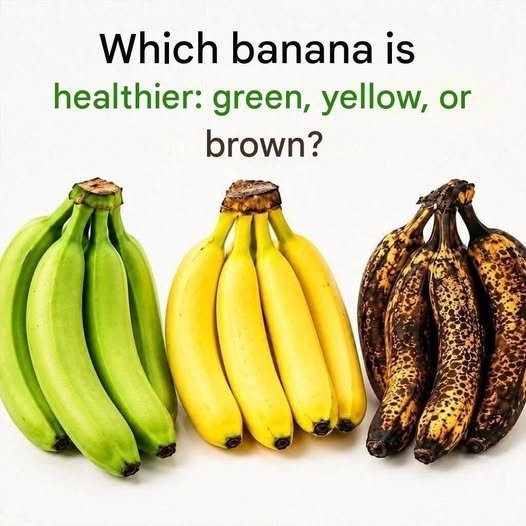
When it comes to bananas, no single color is objectively “healthier” than the others. Instead, each ripeness stage offers unique nutritional benefits depending on your dietary goals, digestion needs, and taste preferences.
Here is how they compare across the spectrum:
1. Green Bananas (Underripe)
-
Best for: Blood sugar control, gut health, and weight management.
-
Nutritional Profile:
-
Resistant Starch: Very high. Resistant starch acts like dietary fiber—it resists digestion in the small intestine, feeding the “good” bacteria in your gut.
-
Lower Sugar: Contains very little sugar, as the starches haven’t broken down yet.
-
Low Glycemic Index (GI): Causes a slower, more gradual rise in blood sugar.
-
-
Downside: They are firm, starchy, less sweet, and can be harder to digest for some people, occasionally causing bloating or gas.
2. Yellow Bananas (Ripe)
-
Best for: Quick energy and easy digestion.
-
Nutritional Profile:
-
Balanced Nutrients: As the banana ripens, resistant starch converts into natural sugars (fructose, glucose, and sucrose), making it much sweeter.
-
Higher Antioxidants: Antioxidant levels increase as the peel turns yellow.
-
Easy to Digest: Softer on the stomach, making them a great pre- or post-workout snack for quick energy.
-
-
Downside: They have a higher glycemic index than green bananas, meaning they will raise blood sugar a bit faster.
3. Brown Bananas (Overripe/Spotty)
-
Best for: Immediate energy, immune support, and maximum antioxidants.
-
Nutritional Profile:
-
High Antioxidants & Micronutrients: As the brown spots appear, the breakdown of chlorophyll produces high levels of powerful antioxidants.
-
Maximum Sugar / Lowest Starch: Almost all of the starch has turned into simple sugars, making them the sweetest and easiest to digest.
-
Immune Boosting: Some studies suggest that heavily spotted bananas produce Tumor Necrosis Factor (TNF), which has cancer-fighting and immune-boosting properties.
-
-
Downside: Vitamin and mineral content (like vitamin C) starts to degrade slightly as they overripe, and the sugar content can cause a rapid spike in blood sugar.
Quick Comparison Summary
| Ripeness Stage | Sugar Content | Starch Content | Digestion Speed | Best For |
| Green | Low | Very High | Slow | Diabetics, gut health, weight management |
| Yellow | Moderate | Moderate | Moderate | Daily snacking, workouts |
| Brown | High | Low | Fast | Quick energy, sensitive stomachs, baking |
Which one should you choose?
-
Choose green if you are managing diabetes, trying to stay full longer, or want to support your gut microbiome.
-
Choose yellow for everyday snacking, steady energy, and great flavor.
-
Choose brown if you have a sensitive stomach, need a rapid burst of energy, or are tossing them into a smoothie or banana bread.
Do you have a specific health goal in mind (like managing blood sugar or workout recovery) that you’re trying to support with your diet?