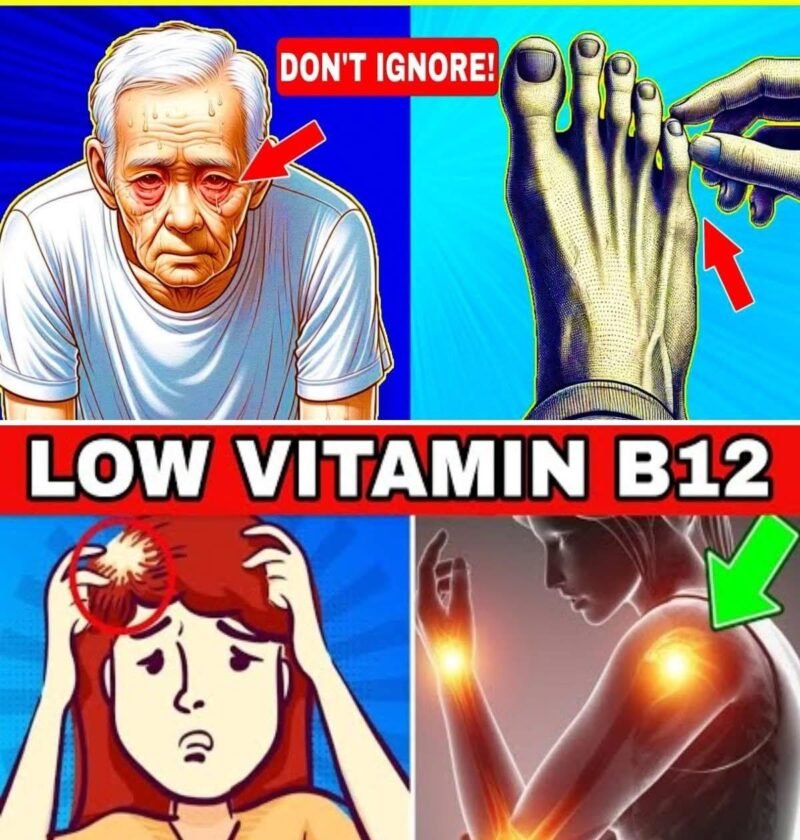
Vitamin B12 is essential for nerve function, DNA synthesis, and the production of red blood cells. Because your body can store B12 for a few years, a deficiency can develop gradually, making its early warning signs easy to write off as everyday stress or aging.
9 Hidden Signs of a Vitamin B12 Deficiency
-
1. Persistent Fatigue and Weakness: Even after a full night’s sleep, you may feel completely drained because a lack of B12 impairs your body’s ability to produce red blood cells, which carry oxygen to your tissues.
-
2. Numbness or Tingling (“Pins and Needles”): B12 plays a crucial role in maintaining the myelin sheath that protects your nerves. A shortage can lead to nerve sensations in your hands and feet.
-
3. Brain Fog and Memory Lapses: Struggling to concentrate, forgetting words easily, or feeling unusually mentally sluggish can sometimes point to low B12 levels affecting cognitive function.
-
4. Pale or Jaundiced Skin: A lack of properly formed red blood cells can break down easily, leading to a pale complexion or a slight yellowish tinge to the skin and whites of the eyes.
-
5. A Smooth, Sore Tongue (Glossitis): Your tongue might feel painful, swollen, or inflamed, and you may notice that the tiny papillae (bumps) on its surface appear smoothed down.
-
6. Unexplained Mood Changes: Low B12 levels can affect your central nervous system, sometimes contributing to heightened irritability, anxiety, or low mood.
-
7. Dizziness and Lightheadedness: Feeling woozy when standing up too quickly can happen when anemia from B12 deficiency temporarily reduces blood oxygen flow.
-
8. Muscle Weakness and Balance Issues: Nerve and muscle coordination can be impacted over time, making you feel unsteady on your feet or uncharacteristically clumsy.
-
9. Mild Vision Changes: In rarer, more advanced cases, a deficiency can damage the optic nerve, leading to blurry or disturbed vision.
Who is Most at Risk?
Vitamin B12 is found naturally in animal products (meat, fish, poultry, eggs, and dairy). Because of this, vegans, vegetarians, older adults (whose stomachs produce less acid needed to absorb B12), and individuals with digestive conditions like Crohn’s or celiac disease are more vulnerable to deficiency.
If you suspect you might be low, a simple blood test ordered by a doctor can check your levels before you start taking high-dose supplements.