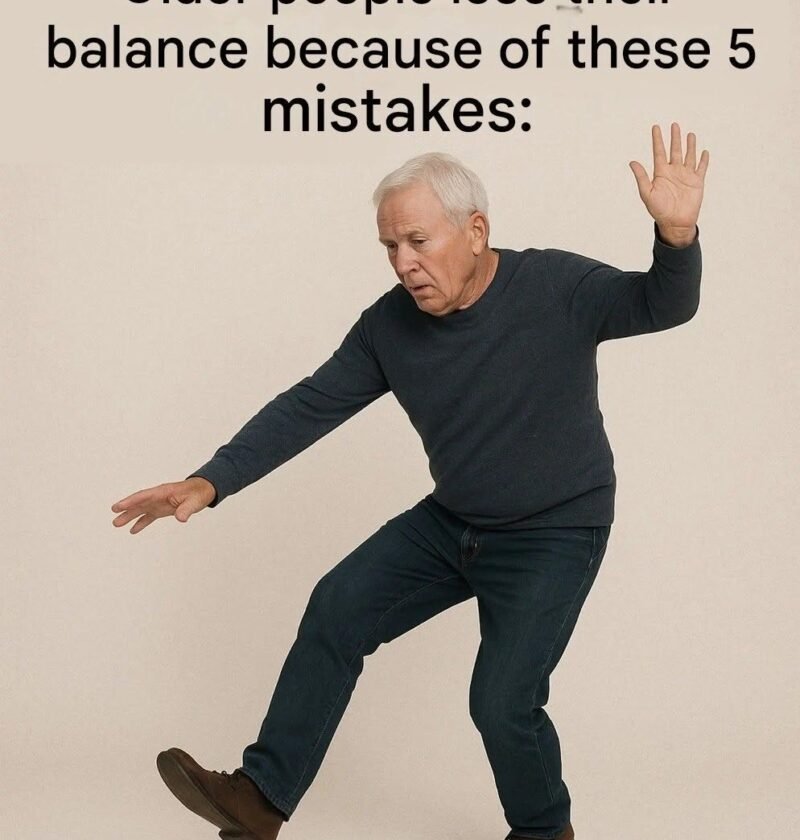
5 Common Mistakes That Can Contribute to Balance Problems in Older Adults
Balance naturally can change with age, but falls aren’t an inevitable part of getting older. Several everyday habits and overlooked health issues can increase the risk.
1. 👟 Wearing unsuitable footwear
Loose slippers, smooth soles, high heels, or shoes without adequate support can make walking less stable. Well-fitting shoes with secure fastenings and good traction are generally safer.
2. 💊 Ignoring medication side effects
Some medicines can cause dizziness, drowsiness, low blood pressure, or blurred vision, all of which can increase fall risk. Don’t stop prescribed medicines yourself; ask a doctor or pharmacist to review your medications if you feel unsteady.
3. 💪 Not maintaining strength and balance
Avoiding physical activity can lead to loss of leg and core strength. Appropriate exercises—such as walking, strength training, and balance exercises—can help maintain mobility and stability.
4. 👀 Neglecting vision or hearing changes
Poor vision can make obstacles and changes in flooring harder to detect. Hearing and inner-ear problems can also affect spatial awareness and balance. Regular checkups can identify problems that may be treatable.
5. 🏠 Leaving fall hazards around the home
Loose rugs, clutter, poor lighting, electrical cords, and slippery bathroom surfaces can turn a minor loss of balance into a fall. Improve lighting, keep walkways clear, secure rugs, and consider grab bars where appropriate.
Other important causes
Balance problems can also result from inner-ear disorders, neurological conditions, low blood pressure, dehydration, arthritis, or other medical problems. A new or rapidly worsening balance problem shouldn’t simply be attributed to age.
🚨 Get urgent help for sudden balance problems
Sudden loss of balance—especially together with facial drooping, weakness or numbness on one side, speech difficulty, vision changes, or a severe headache—can be a sign of stroke. Seek emergency medical attention immediately.