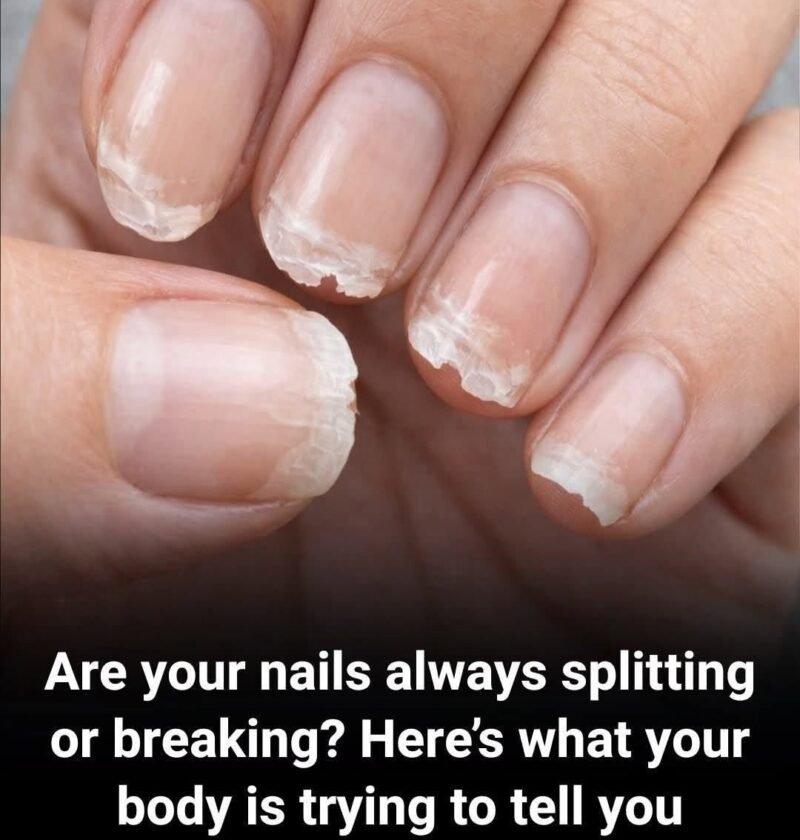
When your nails start splitting, peeling, or snapping off at the slightest bump, it’s easy to assume you just need a better top coat or a stronger hand lotion. But from a dermatologist’s perspective, fragile or brittle nails are often your body’s way of communicating that something deeper is going on.
Brittle nails generally fall into two categories: dry and brittle (easily cracked and splitting) or soft and pliable (bending easily before breaking).
What Your Nails Might Be Trying to Tell You
1. A Nutritional Shortage
While internet myths often blame a single missing vitamin for every health woe, real deficiencies can genuinely weaken your nail plates:
-
Iron Deficiency (Anemia): Low iron can alter the shape and strength of your nails, sometimes causing them to become thin, brittle, or even spoon-shaped (koilonychia).
-
Biotin (Vitamin B7): Though severe deficiencies are rare, adequate biotin supports the production of keratin, the protein that builds strong nails.
-
Protein Shortage: Nails are made of keratin. If your overall diet is lacking in protein, your body deprioritizes non-essential structures like hair and nails, leading to weakness.
2. Chronic Moisture Exposure (or Dehydration)
It sounds contradictory, but nails become brittle from too much water, not too little:
-
Repeatedly washing your hands, swimming, or doing dishes without gloves causes nails to absorb water and then dry out rapidly. This constant swelling and shrinking breaks down the bonds between nail cells, causing peeling and splitting.
3. Harsh Chemicals and Trauma
-
Frequent Manicures: Constantly applying and aggressively removing gel manicures, acrylics, or using harsh acetone nail polish removers strips away the natural protective layers of the nail plate.
-
Household Cleaners: Handling strong detergents or cleaning chemicals bare-handed quickly breaks down keratin strength.
4. Underlying Medical Conditions
Sometimes, weak nails point to a systemic issue:
-
Thyroid Disorders: Both hypothyroidism (underactive thyroid) and hyperthyroidism can slow down cell turnover, resulting in dry, brittle, slow-growing nails.
-
Circulatory or Autoimmune Issues: Conditions that impact overall circulation or inflammatory skin conditions like psoriasis can frequently manifest changes in the nail bed and plate.
Simple Steps to Strengthen Your Nails
If your nails are giving you trouble, you can protect them by shifting your daily habits:
-
Glove Up: Wear rubber or silicone gloves whenever you wash dishes or clean with harsh chemicals.
-
Moisturize Immediately: Apply a thick hand cream or cuticle oil containing ingredients like shea butter, lanolin, or ceramides right after washing your hands while they are still slightly damp.
-
Skip Harsh Removers: Switch to an acetone-free nail polish remover if you polish your nails frequently.
-
File in One Direction: Sawing back and forth with a rough emery board creates micro-tears that lead to splitting. Use a fine-grit glass file and file gently in a single direction.
Are you noticing other symptoms alongside your brittle nails—like unusual fatigue, hair thinning, or skin dryness?