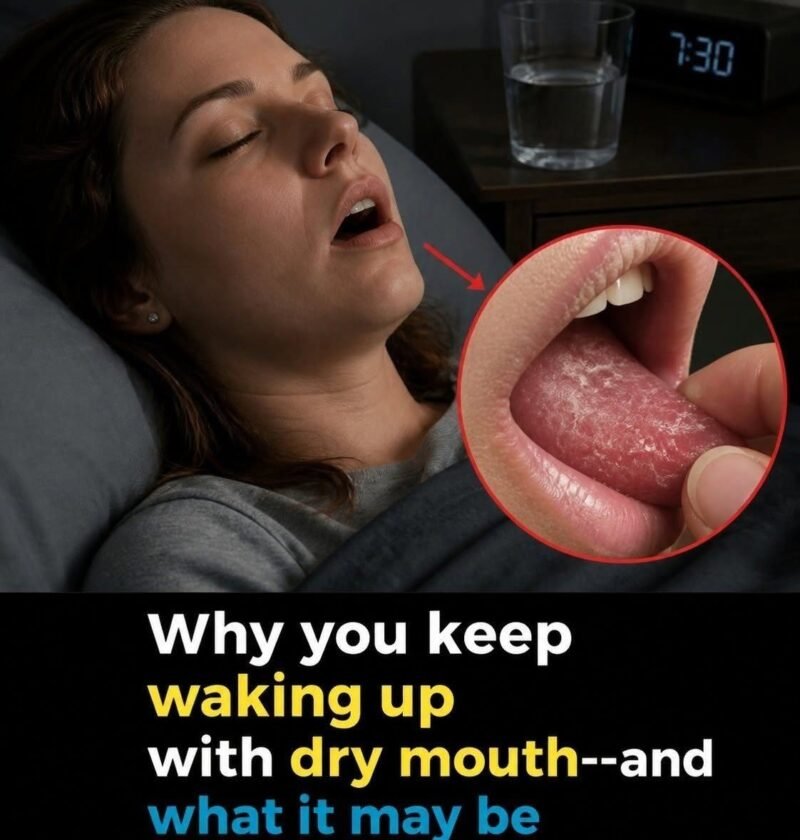
Waking Up With a Dry Mouth? Here’s What Your Body Might Be Telling You
Waking up with a dry, sticky mouth occasionally is common. But if it happens regularly, it can be a clue that something is affecting your saliva production, breathing, hydration, or sleep.
1. You may be dehydrated
Not drinking enough fluids during the day, sweating heavily, or losing fluids from illness can leave you with less saliva overnight. Alcohol and excessive caffeine can also contribute to dehydration.
What to try: Drink water regularly throughout the day rather than consuming a large amount immediately before bed.
2. You may be breathing through your mouth
A blocked nose, allergies, a cold, or nasal congestion can cause you to sleep with your mouth open. Air moving continuously through your mouth can dry the oral tissues.
If you frequently wake with a dry mouth and a stuffy nose, snoring, or an open mouth, nighttime mouth breathing may be worth discussing with a healthcare professional.
3. Your medications could be contributing
Dry mouth is a known side effect of many medications, including some used for allergies, depression, blood pressure, and other conditions.
If your dry mouth began after starting or changing a medication, check its patient information or ask your pharmacist or doctor. Don’t stop a prescribed medication on your own.
4. Snoring or sleep apnea may be involved
Persistent snoring, waking with a dry mouth, morning headaches, gasping or choking during sleep, or excessive daytime sleepiness can occur with sleep-disordered breathing, including obstructive sleep apnea.
Dry mouth alone doesn’t mean you have sleep apnea, but a combination of these symptoms deserves medical evaluation.
5. Saliva production may be reduced
Some medical conditions can affect saliva production. Persistent dry mouth can also occur with problems involving the salivary glands or certain systemic conditions.
If your mouth feels dry throughout the day as well as at night, especially if you have difficulty swallowing, speaking, or eating dry foods, mention it to a healthcare professional.
6. Your oral health may need extra attention
Saliva protects your teeth and helps control the acids and bacteria in your mouth. When saliva is reduced, the risk of tooth decay, gum problems, bad breath, and oral discomfort can increase.
Good oral hygiene, regular dental checkups, and fluoride toothpaste become particularly important if dry mouth is persistent.