A vitamin B12 deficiency can creep up slowly over months or even years, making its early warning signs easy to brush off as everyday stress, aging, or fatigue. Because B12 is essential for producing red blood cells, maintaining nerve function, and DNA synthesis, a shortage impacts your entire body.
Crucial symptoms of a vitamin B12 deficiency that should never be ignored include:
1. Profound Fatigue and Weakness
-
The Sign: Feeling utterly drained, sluggish, or bone-tired despite getting a full night’s sleep.
-
Why it happens: Without enough B12, your body cannot produce sufficient healthy red blood cells to carry oxygen throughout your tissues. This leads to megaloblastic anemia, starving your cells of the oxygen they need to create energy.
2. Numbness, Tingling, and “Pins and Needles”
-
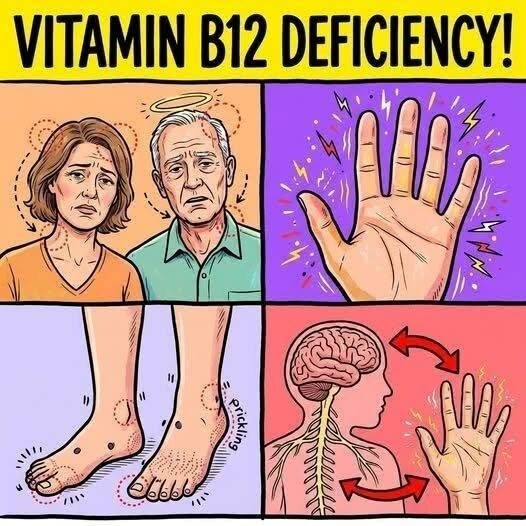
The Sign: A chronic prickling sensation, numbness, or a feeling of electricity traveling down your hands, feet, fingers, or legs.
-
Why it happens: B12 is vital for maintaining the protective myelin sheath that insulates your nerve fibers. A deficiency damages this coating, disrupting neurological signaling and nerve health.
3. Balance Problems and Cognitive Changes (“Brain Fog”)
-
The Sign: Unexplained clumsiness, stumbling, frequent tripping, memory lapses, confusion, or difficulty concentrating.
-
Why it happens: Nerve damage in the peripheral and central nervous systems affects your body’s proprioception (your sense of where you are in space). Neurological depletion can also impair cognitive sharpness and memory.
4. A Smooth, Sore, Red Tongue (Glossitis) and Mouth Ulcers
-
The Sign: A tongue that feels tender, swollen, or looks unusually glossy and smooth (due to the loss of tiny taste bud bumps), accompanied by painful canker sores or mouth corners cracking.
-
Why it happens: Rapidly dividing cells—like those lining your mouth and tongue—are heavily dependent on B12, making them quick to show physical signs of deficiency.
5. Pale or Jaundiced (Yellowish) Skin
-
The Sign: A pale, washed-out complexion or a subtle yellow tint to the skin and whites of the eyes.
-
Why it happens: When red blood cells break down prematurely due to poor production, they release an excess of bilirubin, which can give the skin and eyes a yellowish tinge.
6. Unexplained Mood Changes, Anxiety, or Depression
-
The Sign: Sudden shifts toward low mood, irritability, heightened anxiety, or uncharacteristic apathy.
-
Why it happens: B12 plays a major role in synthesizing brain chemicals (neurotransmitters) like serotonin and dopamine that regulate your mood and emotional stability.
7. Shortness of Breath and Dizziness
-
The Sign: Getting winded easily from minimal exertion, such as climbing a flight of stairs, or feeling lightheaded when standing up.
-
Why it happens: Directly tied to anemia; your respiratory and cardiovascular systems must work much harder to pump oxygen-depleted blood through the body.
Who is Most at Risk?
B12 deficiency is especially common in older adults (due to a natural drop in stomach acid needed to absorb the vitamin from food), vegans and vegetarians (since B12 is found almost exclusively in animal products), and individuals with digestive conditions like Crohn’s disease, celiac disease, or those taking long-term acid-reflux medications (PPIs).
Note: A simple blood test can check your B12 levels. If you suspect a deficiency, it is important to consult a healthcare provider before taking high-dose supplements, as symptoms can sometimes overlap with other conditions like folate deficiency.
Are you or someone you know experiencing any of these symptoms, or looking into dietary sources of B12?