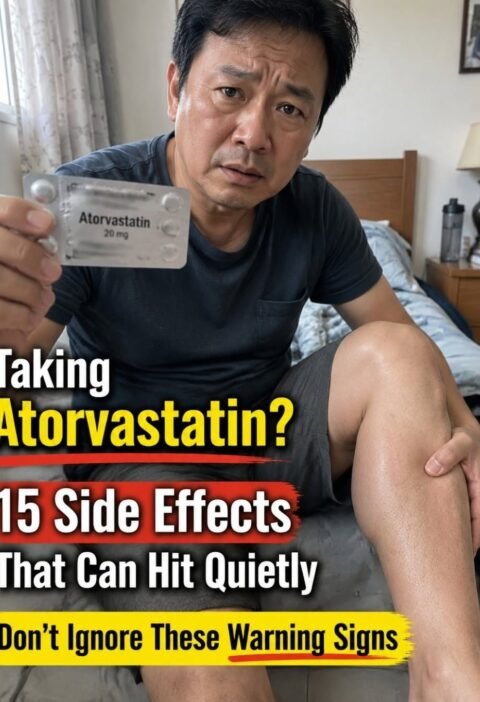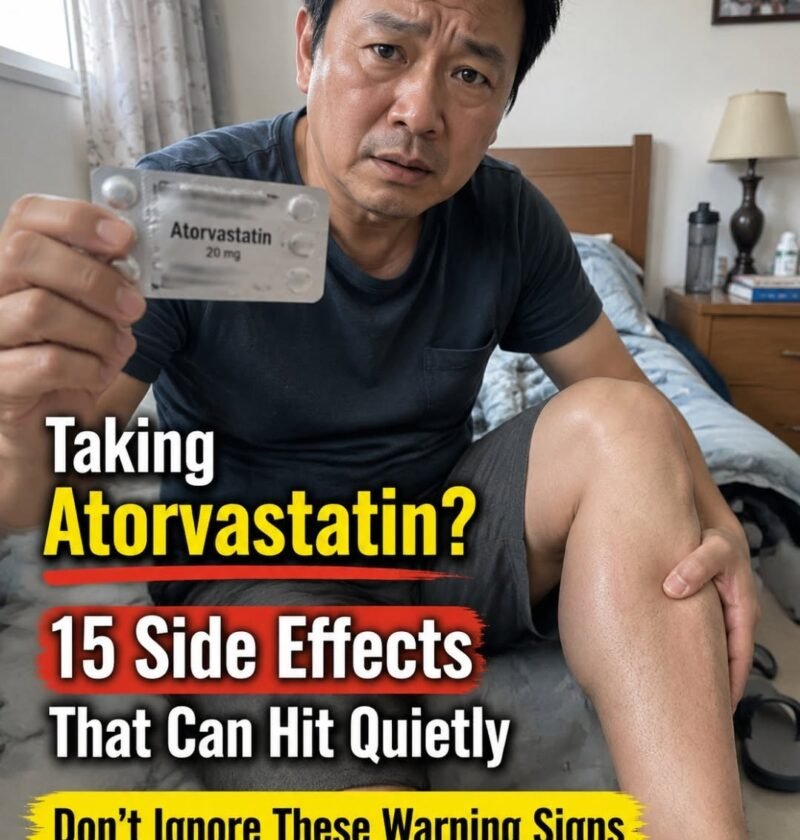
If you’re fact-checking this headline, atorvastatin can cause side effects, but “15 subtle side effects” makes the issue sound more predictable than it is. Most people tolerate atorvastatin, and it is prescribed to lower cholesterol and reduce the risk of heart attack and stroke. nhs.uk+1
15 possible effects to know about
Depending on the person and dose, reported effects include:
- Muscle aches or pain
- Muscle cramps
- Muscle weakness
- Joint pain
- Pain in an arm or leg
- Headache
- Dizziness
- Nausea
- Indigestion
- Constipation
- Diarrhea
- Gas or abdominal discomfort
- Tiredness or weakness
- Sleep problems
- Changes in liver enzymes
Several of these are relatively nonspecific, so having one doesn’t prove atorvastatin is responsible. Some reported effects are uncommon or rare rather than something most people experience. nhs.uk+1
🚨 Symptoms you shouldn’t ignore
The most important warning is unexplained muscle pain, tenderness, cramps, or weakness, particularly if severe or accompanied by fever or dark/red-brown urine. Rarely, statins can cause serious muscle damage (rhabdomyolysis). nhs.uk+1
Also seek medical attention for signs of possible liver injury, such as yellow skin or eyes, dark urine, or unusual severe fatigue, or for severe abdominal pain that could indicate pancreatitis. nhs.uk+1
Don’t stop it without medical advice
If you think atorvastatin is causing problems, talk with your doctor or pharmacist. They may check for other causes, review interacting medicines, adjust the dose, or consider another statin. Don’t stop the medication on your own, because your cholesterol can rise and you may lose its cardiovascular protection. nhs.uk+1
Grapefruit juice and certain medicines—including some antibiotics, antifungals, antiviral drugs, and other cardiovascular medicines—can increase the risk of atorvastatin-related problems, so make sure your healthcare professional knows everything you’re taking. nhs.uk