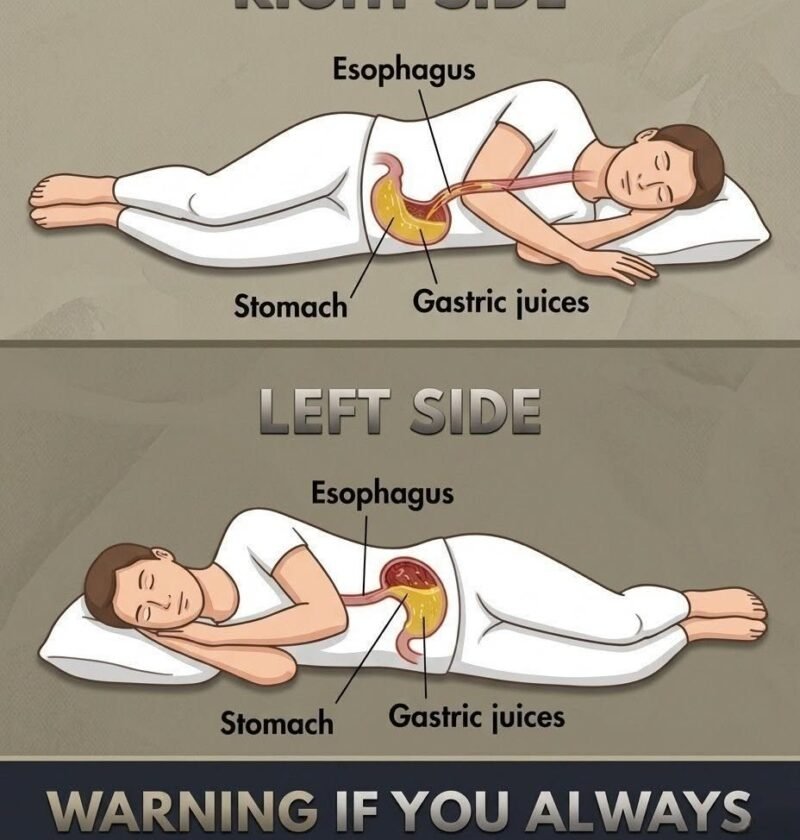
If you always sleep on your right side, your body experiences a specific set of physical, digestive, and structural effects. While side sleeping is generally comfortable and great for keeping airways open (reducing snoring), choosing the right side specifically comes with unique considerations:
1. Digestive Impact (Acid Reflux)
-
The Drawback: Unlike the left side—which keeps the junction between your stomach and esophagus above the acid line—sleeping on your right side can relax the lower esophageal sphincter and make it easier for stomach acid to leak upward.
-
What to watch for: If you frequently wake up with a sour taste, heartburn, or a burning sensation in your chest (GERD), your right-side sleeping habit may be contributing to it.
2. Pressure on the Right Shoulder and Hip
-
The Drawback: All of your upper-body weight is compressed directly onto your right shoulder joint and right hip.
-
What to watch for: Over time, this can restrict blood flow to the joint, irritate the bursa, or pinch the rotator cuff tendons, potentially leading to morning stiffness, shoulder soreness, or hip bursitis.
3. Cardiovascular and Circulatory Considerations
-
The Context: Because the heart sits slightly toward the left side of the chest, some physiological theories and studies suggest that sleeping on the right side alters how the heart functions against gravity. While this is generally well-tolerated by healthy adults, clinicians sometimes advise individuals with specific heart failure or chronic cardiovascular conditions to be mindful of which side they favor.
4. Potential Benefits
-
Easier Breathing: Like all side-sleeping positions, lying on your side prevents the tongue and soft palate from collapsing backward into your throat, which significantly cuts down on snoring and mild sleep apnea symptoms.
-
Relief for Left-Sided Pain: If you have an injury, surgery, or chronic ache on your left side, sleeping on your right side naturally shields your vulnerable side from pressure.
How to Optimize Right-Side Sleeping
If right-side sleeping is your natural preference or is medically comfortable for you, you can minimize strain with a few ergonomic adjustments:
-
Support Your Neck: Use a pillow that matches the distance between the tip of your shoulder and your ear to keep your cervical spine straight.
-
Knee Pillow: Place a pillow between your knees to keep your pelvis aligned and take rotational pressure off your lower back and right hip.
-
Watch Late-Night Eating: Avoid heavy or spicy meals 2 to 3 hours before bed to mitigate the risk of right-side acid reflux.