Dark age spots on the hands: what actually works
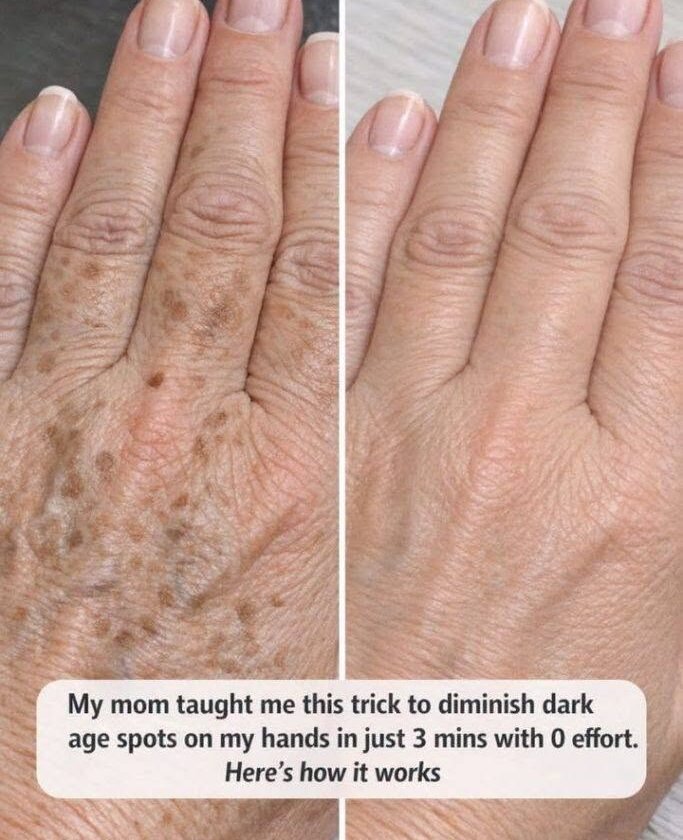
A “3-minute, zero-effort” kitchen trick may make the skin look temporarily brighter, but it won’t safely erase age spots that quickly. Age spots (solar lentigines) are usually related to cumulative UV exposure and increased pigment production.
A safer approach
-
Use broad-spectrum SPF 30+ on your hands every day. Reapply when outdoors, especially after washing your hands.
-
Use a moisturizer to improve the appearance of dry, rough skin.
-
For gradual fading, products containing ingredients such as vitamin C, retinoids, or certain pigment-reducing agents may help, but they can take weeks to months and may irritate sensitive skin.
-
A dermatologist can offer faster treatments such as laser therapy, cryotherapy, or chemical peels when appropriate.
Avoid DIY “bleaching” tricks
Don’t put lemon juice, baking soda, vinegar, hydrogen peroxide, or undiluted essential oils on age spots. They can irritate or burn the skin and sometimes leave darker pigmentation behind.
Also, not every dark spot is an age spot. A spot that is new, changing in size or color, irregular, bleeding, itching, or failing to heal should be examined by a dermatologist.
Bottom line: There isn’t a safe home method that permanently removes genuine age spots in three minutes. Sun protection is the most important step, while proven treatments work gradually.