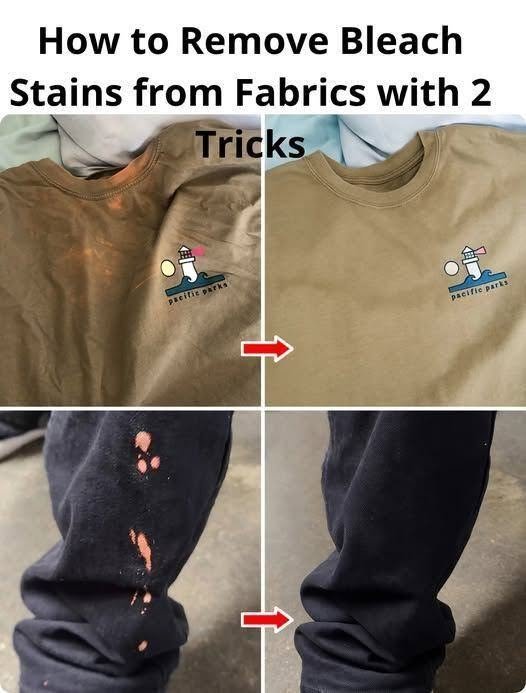
If you’re looking for a “2 tricks” guide, the important thing to know is that bleach usually doesn’t create a removable stain—it removes the fabric’s original dye. So the goal is generally to disguise or recolor the affected area.
Trick 1: Rubbing alcohol for small bleach spots
For a small spot on a dark, colorfast fabric, you can sometimes spread the surrounding dye back toward the bleached area.
-
Put a clean white cloth behind the damaged area.
-
Dab a small amount of isopropyl rubbing alcohol onto a cotton swab.
-
Gently rub from the outside of the bleach mark toward the center.
-
As dye transfers, continue carefully until the color looks more even.
-
Rinse the area with cool water and wash according to the garment label.
Test first: Alcohol can damage some synthetic fabrics, finishes, or dyes. Test an inconspicuous area before treating the visible spot.
Trick 2: Fabric marker or fabric dye
For a noticeable bleach mark, matching the original color is usually more reliable.
-
For a tiny spot, use a fabric marker in a matching shade.
-
For larger areas, use a suitable fabric dye and follow its instructions.
-
Apply gradually rather than using a very dark color immediately—you can always add more color.
Important: Never mix bleach with vinegar, ammonia, rubbing alcohol, or other household cleaners. Chemical reactions can produce dangerous fumes.
If the bleach has caused a large white/orange patch or weakened the fabric, recoloring or turning the damaged area into a deliberate design may work better than trying to “remove” the bleach.