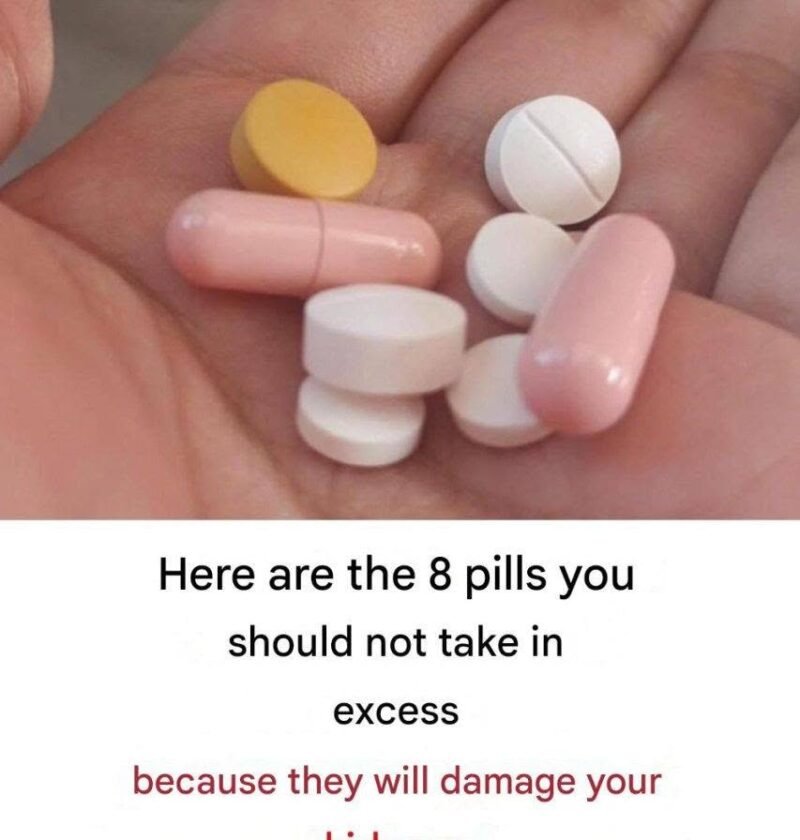
8 Types of Medicines That Can Affect the Kidneys
The headline “eight pills you shouldn’t take” is too absolute. Many medicines on such lists are safe and medically important when used at the correct dose. The risk depends on the drug, dose, duration, kidney function, hydration, and other medicines you’re taking. NIDDK+1
Examples of medicines that can require particular kidney-related caution include:
-
NSAID painkillers — ibuprofen, naproxen, diclofenac, and similar drugs can reduce kidney blood flow and cause acute kidney injury, particularly with high doses, prolonged use, dehydration, or existing kidney disease. National Kidney Foundation
-
Certain antibiotics — some antibiotics can directly affect the kidneys or accumulate when kidney function is reduced, requiring dose adjustment. National Kidney Foundation
-
Certain antiviral medicines — some can cause kidney problems or require dose adjustments based on kidney function. National Kidney Foundation
-
Certain antifungals — some, particularly amphotericin B, can be nephrotoxic. National Kidney Foundation
-
Lithium — long-term treatment can affect kidney function and requires appropriate monitoring. National Kidney Foundation
-
Some cancer medicines — several chemotherapy and targeted medicines can affect the kidneys and require monitoring. National Kidney Foundation
-
Some blood-pressure medicines in specific situations — ACE inhibitors, ARBs, and diuretics aren’t simply “bad for the kidneys”; they often protect kidney function when appropriately prescribed. However, dehydration or combinations with NSAIDs can increase the risk of acute kidney injury. NIDDK+1
-
Some medicines requiring kidney-based dose adjustment — drugs eliminated primarily through the kidneys can accumulate when kidney function falls, even when the medication isn’t inherently kidney-toxic. National Kidney Foundation
The biggest everyday warning
If you have kidney disease, don’t routinely self-treat with NSAIDs such as ibuprofen or naproxen without medical advice. This is one of the clearest medication-related kidney risks. National Kidney Foundation
And don’t stop prescribed medication because of a viral list. A pharmacist or doctor can review your exact medicines, kidney function (eGFR), and doses and determine what actually needs changing.
If you give me the eight specific pills named in the article, I can go through them one by one and separate the genuine kidney risks from the exaggerated claims.