-
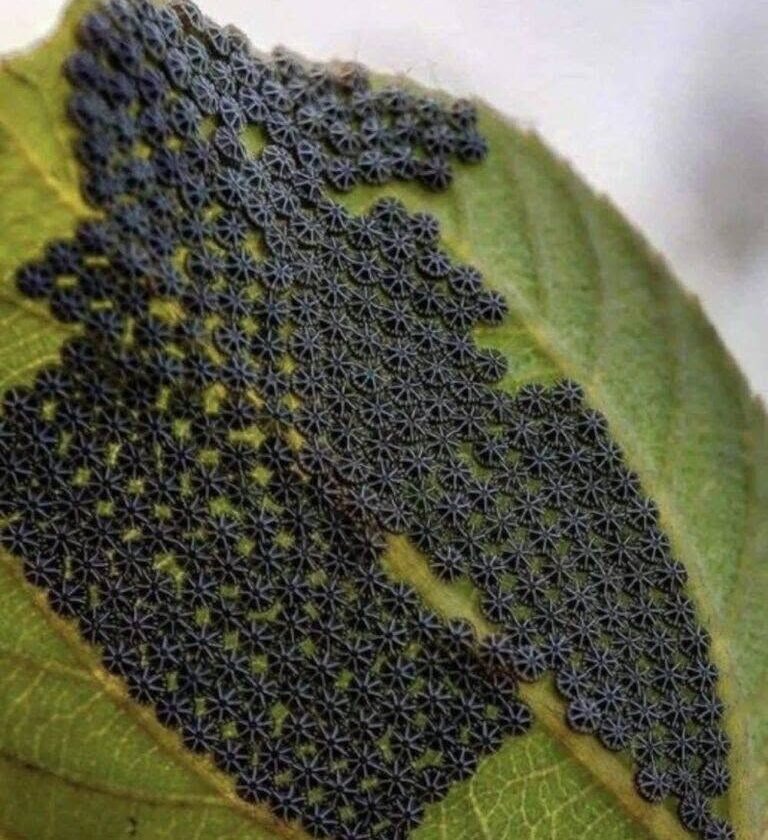
Those are insect eggs, and the photo appears to show the eggs of the mourning cloak butterfly (Nymphalis antiopa). The distinctive eggs are dark, intricately patterned, and arranged in dense clusters on leaves.
A few useful points:
-
🦋 They are butterfly eggs, not a fungus or plant disease.
-
The striking star/rosette appearance comes from the sculptured outer egg surface.
-
They can start out lighter and become dark as development progresses.
-
You don’t need to touch or remove them. If they’re on a plant you want to preserve for wildlife, leaving them alone allows the caterpillars to hatch.
-
The caterpillars will eventually feed on their host plants, so if it’s a valuable garden plant, you may want to monitor the plant rather than automatically treating it with insecticide.
One caveat: egg appearance alone isn’t always enough to identify the exact species, because several insects produce highly patterned eggs. The viral version of this exact image is specifically identified as mourning cloak butterfly eggs.
If you tell me what plant/leaf this was found on and roughly where you are, I can narrow down whether mourning cloak is actually plausible in your area.
-