Can Your Fingernails Predict Life Expectancy?
There is no single fingernail sign that can reliably predict how long someone will live. Headlines suggesting that a particular nail feature reveals your life expectancy overstate what medical research can tell us.
However, changes in the nails can sometimes provide clues about underlying health conditions.
-
Nail clubbing: The fingertips become enlarged and the nails curve more around the fingertips. It can be associated with certain lung, heart, liver, or gastrointestinal diseases and deserves medical evaluation.
-
New white or pale nails: Can occur for several reasons, including nutritional problems, liver disease, or normal variation.
-
Brittle or splitting nails: Often result from repeated water/chemical exposure or aging, but can sometimes occur with thyroid or nutritional problems.
-
A dark streak under one nail: Most are not melanoma, but a new or changing dark band should be assessed by a dermatologist because nail melanoma is possible.
-
Nail separation or persistent discoloration: Can result from fungal infection, trauma, psoriasis, medications, or other conditions.
What about “half-moon” or nail-line claims?
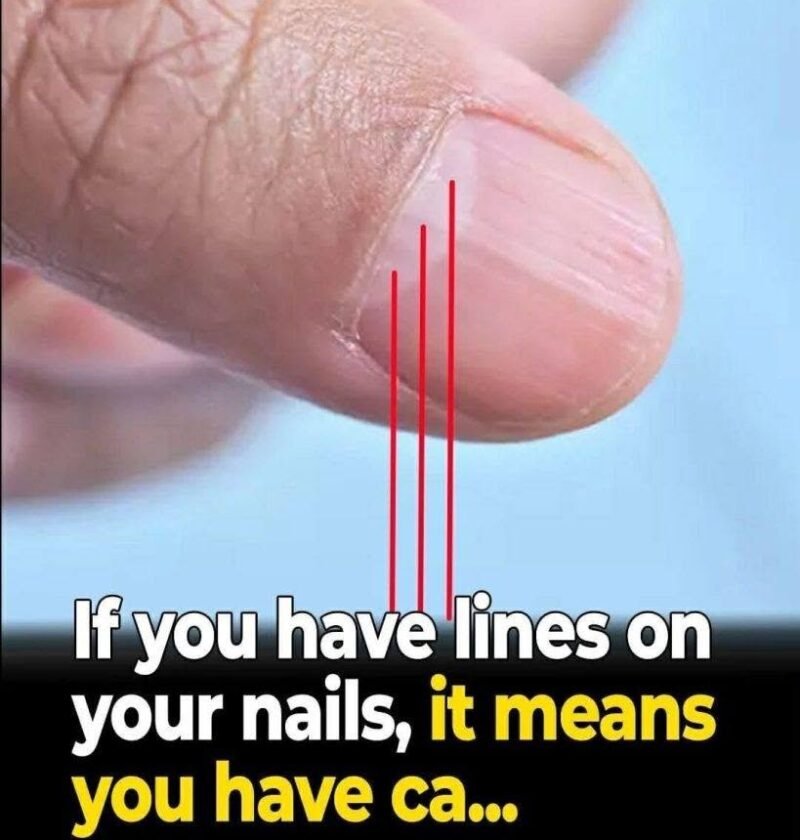
Claims that the size of the lunula (the pale half-moon at the nail base), vertical lines, or other ordinary nail features can tell you how many years you have left aren’t established medical methods for predicting individual life expectancy.
If a nail suddenly changes, develops a new dark streak, becomes markedly clubbed, or changes along with unexplained weight loss, breathing problems, fatigue, or other symptoms, have it examined rather than trying to interpret it as a prediction of longevity.