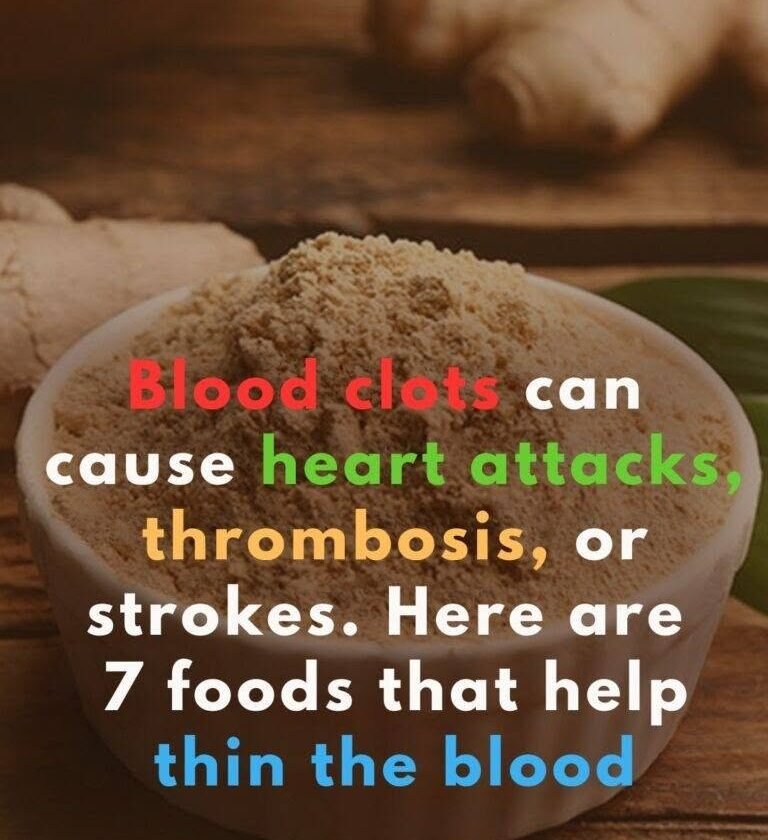
7 Foods Often Called “Blood-Thinning” Foods 🩸
The phrase “blood-thinning foods” can be misleading. Foods don’t work like prescription anticoagulants, and eating a particular food won’t reliably prevent or treat a blood clot.
That said, some foods contain compounds that can modestly affect platelet activity or blood-clotting pathways:
- 🧄 Garlic — may have mild effects on platelet aggregation, particularly in concentrated amounts.
- 🐟 Fatty fish — salmon, sardines, and mackerel provide omega-3 fatty acids, which can influence platelet function.
- 🫚 Ginger — laboratory and limited human evidence suggests it may affect platelet activity.
- 🟡 Turmeric — curcumin has been studied for effects on inflammation and platelet function.
- 🫐 Berries — contain polyphenols that may support cardiovascular health.
- 🍇 Grapes — provide polyphenols such as resveratrol, which have been investigated for effects on platelets.
- 🫒 Extra-virgin olive oil — part of a heart-healthy dietary pattern and may have modest effects on platelet function.
⚠️ Important if you take blood thinners
If you take warfarin, apixaban, rivaroxaban, dabigatran, clopidogrel, aspirin, or another blood-thinning medication, don’t deliberately consume large amounts of these foods or supplements to try to make your blood “thinner.”
In particular, concentrated garlic, ginger, turmeric, fish-oil, or herbal supplements may increase bleeding risk or interact with medications.
Also, with warfarin, the key issue with leafy green vegetables isn’t that they’re dangerous—their vitamin K content means it’s important to keep your intake reasonably consistent rather than suddenly making a major dietary change.
Bottom line: A balanced diet can support cardiovascular health, but food is not a substitute for prescribed anticoagulant or antiplatelet treatment.