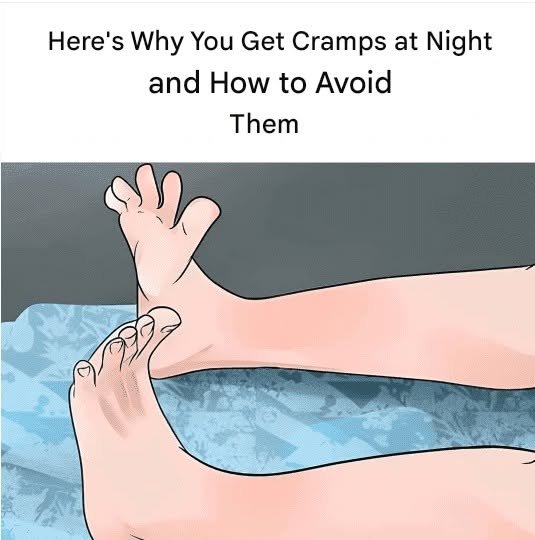
Why We Get Cramps at Night
Nighttime leg cramps are sudden, painful muscle contractions—most often affecting the calf or foot. They’re common, especially as people get older, and there isn’t always one single cause.
Common reasons
- Muscle fatigue or overuse: A long day of walking, standing, or exercise can contribute.
- Prolonged sitting or awkward positioning: Keeping a leg in one position for a long time may play a role.
- Dehydration: Not drinking enough fluids can make cramps more likely in some people.
- Mineral or nutritional problems: Low levels of certain minerals can contribute, although simply taking magnesium or potassium isn’t a universal solution.
- Pregnancy and aging: Both can increase the likelihood of nighttime cramps.
- Certain medications or medical conditions: Some medicines and conditions affecting nerves, muscles, circulation, or metabolism can be associated with cramps.
What to do when a cramp strikes
Gently stretch the affected muscle. For a calf cramp, straighten the leg and pull the toes toward you, or stand and gently put weight on the affected leg if safe. Light massage and warmth may also help.
To reduce recurring cramps, stay adequately hydrated, stretch your calves gently before bed, and maintain regular physical activity.
Don’t routinely take potassium or magnesium supplements just for cramps without medical advice. They aren’t appropriate for everyone and can be harmful in certain circumstances.
If cramps are frequent, severe, newly developing, associated with swelling/weakness/numbness, or started after a new medication, discuss them with a healthcare professional.