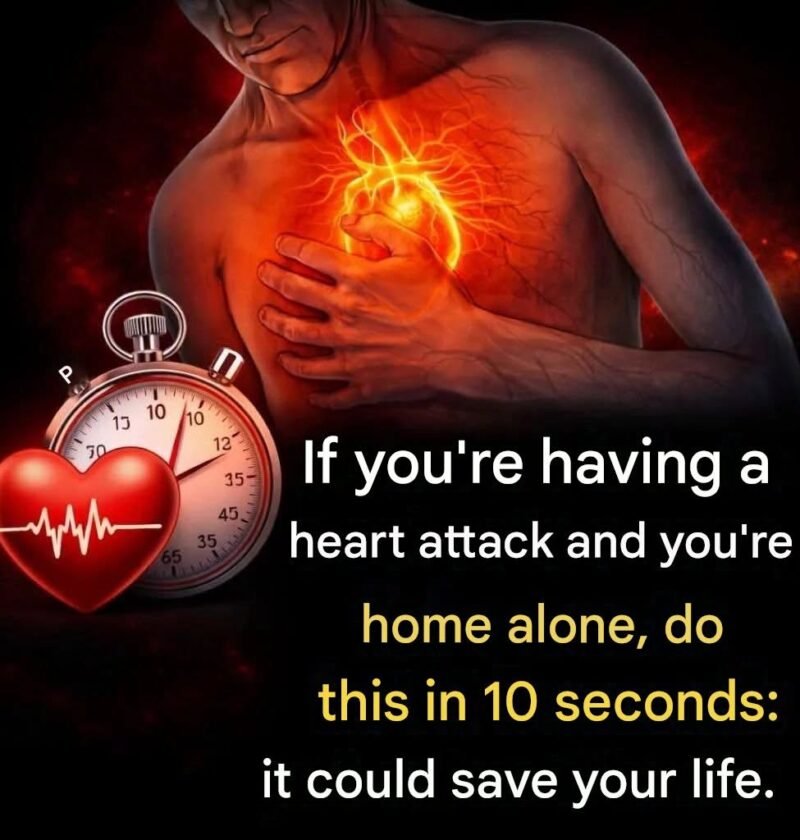
When viral health posts claim that you can survive a heart attack at home by performing a specific 10-second trick—most famously the “cough CPR” myth—they are sharing dangerous misinformation that can cost someone their life during a true medical emergency.
The myth claims that if you feel a heart attack starting when you are alone, you should take deep breaths and cough vigorously and repeatedly every two seconds to “squeeze” your heart and keep blood flowing.
From a clinical and cardiology standpoint, cough CPR does not work for someone experiencing a sudden heart attack at home. Here is the medical reality of what is actually happening during a heart attack, why the “cough trick” is dangerous, and what you must do instead to save a life:
Why the “Cough CPR” Trick is a Dangerous Myth
-
The Physiology of a Heart Attack: A heart attack (myocardial infarction) is almost always caused by a blocked coronary artery, which cuts off blood flow to a portion of the heart muscle. Coughing cannot unblock a clotted artery.
-
When Cough CPR Is Actually Used: In a strictly controlled hospital setting (like a cardiac catheterization laboratory), doctors occasionally instruct a fully conscious patient to cough if their heart rhythm momentarily flattens or stalls on an ECG monitor. It transiently raises intra-thoracic pressure for a matter of seconds to keep blood moving to the brain. It is a clinical procedure performed under medical supervision, not a DIY home remedy for a heart attack.
-
The Danger of Delay: If someone experiencing a heart attack wastes precious seconds trying to cough repeatedly instead of calling for emergency help, they pass out, lose consciousness, and delay the vital medical intervention needed to restart or protect their heart.
The Seven Red-Flag Symptoms of Acute Cardiac Distress
Recognizing the true signs of a heart attack means you can act immediately. Symptoms can present differently in everyone, but classic warning signs include:
-
Chest Pain or Pressure: A heavy, crushing, squeezing, or tight sensation in the center of your chest that feels like an elephant is sitting on it.
-
Radiation to the Upper Body: Pain, aching, or numbness that spreads outward into one or both arms, the back, neck, jaw, or upper stomach.
-
Sudden, Unexplained Shortness of Breath: Feeling winded or unable to catch your breath, often happening alongside chest discomfort or even without it.
-
Cold Sweats: Breaking out in a sudden, cold, clammy sweat for no apparent reason.
-
Nausea, Indigestion, or Vomiting: Feeling violently sick to your stomach, which is frequently mistaken for severe acid reflux or food poisoning.
-
Dizziness or Lightheadedness: A sudden, overwhelming wave of wooziness or feeling like you are about to faint.
-
Profound, Unexplained Fatigue: An abnormal, sudden wave of sheer exhaustion, particularly in women.
What You Should Do in the First 10 Seconds (And Beyond)
If you or someone near you exhibits signs of a heart attack at home, discard the internet tricks and take immediate, evidence-based action:
-
Call 911 (or Your Local Emergency Number) Immediately: Do not wait to see if it passes, do not call a relative first, and do not try to drive yourself to the hospital. Emergency responders begin life-saving care the moment they arrive.
-
Chew an Aspirin (If Available): If you are not allergic and have no history of severe bleeding disorders, chewing and swallowing a regular, uncoated aspirin (325 mg) helps prevent platelets from clumping together, slowing down the growth of the blood clot blocking your artery.
-
Sit Down and Rest: Stop whatever physical activity you are doing immediately. Sit on the floor or in a comfortable chair to reduce the heart’s workload and prevent injury if you faint.
-
Unlock the Front Door: If you are home alone, unlock your front door so emergency paramedics can enter quickly if you lose consciousness.
Cardiology Reminder: Seconds matter during a cardiac event. Never rely on social media hacks or home remedies when minutes of delay can mean the difference between full recovery and permanent heart damage.
Are you reviewing these emergency protocols for general preparedness, or is there a specific heart health concern on your mind today?


