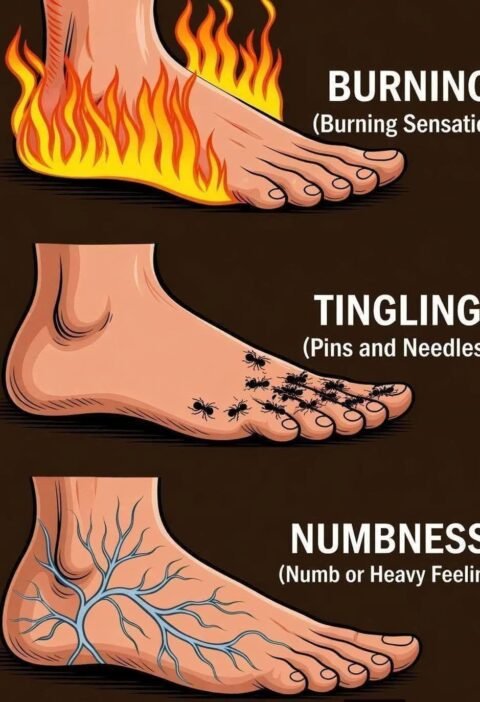
If by “dead feet” you mean numbness, tingling, pins-and-needles, or reduced sensation, and by “heavy calves” you mean aching, fatigue, tightness, or a feeling of weakness, the headline is a little misleading: there is no single vitamin that is universally responsible for these symptoms.
Vitamin B12 is the most relevant vitamin for “dead feet”
Vitamin B12 is particularly important because deficiency can affect the nervous system. Symptoms can include:
-
Numbness or tingling in the feet and hands
-
Pins-and-needles sensations
-
Muscle weakness
-
Balance or walking problems
-
Unexplained fatigue
Importantly, neurological symptoms can occur even when someone does not have anemia. nhs.uk+1
B12 deficiency can result from inadequate dietary intake, but also from problems absorbing B12 and certain medications or medical conditions. nhs.uk
What about heavy or tired calves?
Heavy calves aren’t specific to a vitamin deficiency. Possible explanations include:
-
B12 deficiency — particularly if heaviness occurs together with numbness/tingling or weakness.
-
Iron deficiency/anemia — can cause generalized tiredness and lack of energy and may contribute to restless legs, but it doesn’t typically explain numb feet by itself. nhs.uk
-
Vitamin D deficiency — can be associated with muscle weakness and aches.
-
Electrolyte disturbances — can contribute to muscle cramps or weakness.
-
Nerve compression or peripheral neuropathy — for example, from diabetes or a spinal/nerve problem.
-
Circulation problems — particularly if leg discomfort or heaviness occurs with walking and improves with rest.
-
Prolonged standing, inactivity, or venous problems — can also make the calves feel heavy.
How to know whether B12 is actually the problem
Rather than taking several supplements and guessing, a clinician can evaluate the symptoms and, when appropriate, order blood tests. NICE specifically recommends considering B12 testing when compatible symptoms and risk factors are present; symptoms alone aren’t specific to B12 deficiency. NICE
If B12 deficiency is confirmed, treatment can involve oral B12 or injections depending on the underlying cause and whether neurological symptoms are present. nhs.uk
Don’t ignore persistent numbness
Untreated B12 deficiency can sometimes cause neurological damage that may become irreversible, so persistent or progressive numbness deserves evaluation rather than simply taking a multivitamin. nhs.uk
Urgent assessment is appropriate for sudden numbness or weakness, especially on one side, or a leg/foot that suddenly becomes cold, pale/blue, severely painful, or difficult to move.
If you tell me your age, whether both feet are affected, whether you have tingling/numbness vs. just heaviness, and whether the symptoms occur at rest or while walking, I can explain which deficiencies or other causes fit the pattern and which blood tests are commonly considered.