Which Banana Is Actually the Healthiest? 🍌
There isn’t one banana that’s universally “healthiest.” Different varieties and ripeness levels have slightly different nutritional profiles, and for most people, the best choice is simply the banana that fits their diet.
🍌 By ripeness
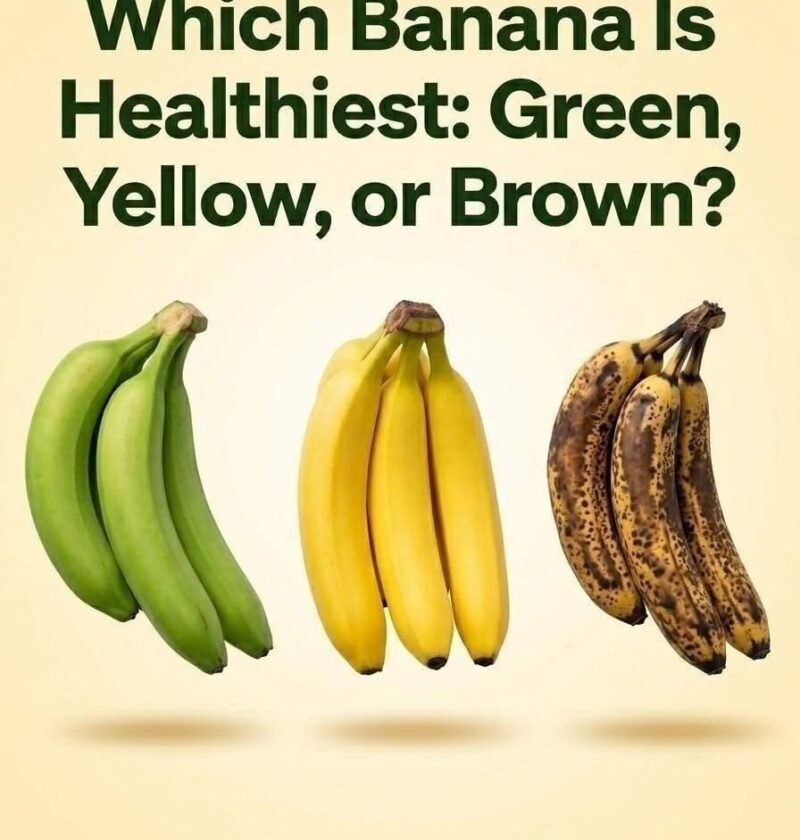
- Green banana: Higher in resistant starch, which is fermented by gut bacteria and may help support digestive health and blood-sugar control. It can also be harder to digest for some people.
- Yellow banana: A good everyday choice—sweet, easy to digest, and provides potassium, vitamin B6, vitamin C, and fiber.
- Very ripe banana: Contains more readily available sugars and less resistant starch. It’s still nutritious, but it may raise blood glucose more quickly than a less-ripe banana.
🍌 By variety
Plantains are also bananas botanically, but they’re usually cooked and contain more starch. Red bananas and other specialty varieties provide similar core nutrients, with modest differences in antioxidants and micronutrients.
What about diabetes?
You don’t necessarily have to avoid bananas if you have diabetes. Portion size and overall carbohydrate intake matter. A small or medium banana paired with a source of protein or healthy fat—such as plain yogurt or nuts—may produce a more gradual rise in blood glucose than eating a large, very ripe banana by itself.
🏆 So which should you choose?
For general health: a normal yellow banana is an excellent choice.
For more resistant starch: choose a somewhat green banana.
For maximum convenience and sweetness: choose a ripe yellow banana.
For most people, the difference between banana varieties is much less important than your overall eating pattern.
If you tell me whether your goal is weight loss, diabetes/blood sugar control, gut health, or muscle/heart health, I can tell you which type and ripeness makes the most sense.