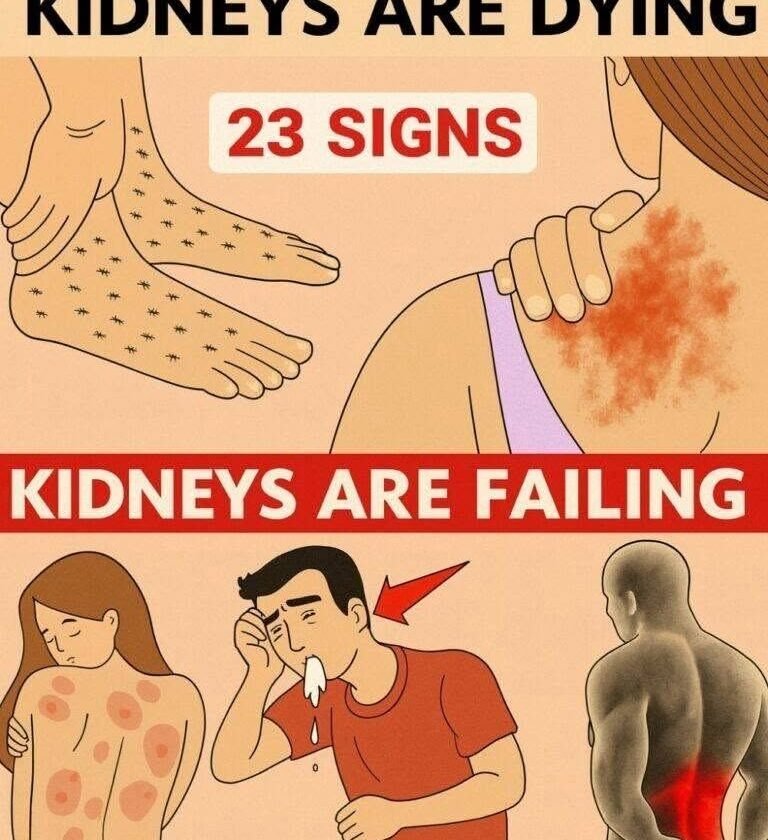
🫘 23 Signs Your Kidneys Might Be in Trouble
Kidney disease can develop gradually and sometimes causes few or no symptoms until kidney function has significantly declined. That’s why persistent or unusual changes deserve attention rather than relying on a symptom checklist alone.
Here are 23 possible signs or clues:
- Swollen ankles, feet, or legs — fluid retention can occur when the kidneys aren’t removing enough sodium and water.
- Puffy eyes, particularly in the morning — can sometimes occur when protein leaks into the urine.
- Foamy or unusually bubbly urine — persistent foam can indicate excess protein in the urine.
- Blood in the urine — urine may appear pink, red, or cola-colored.
- Urinating much more often — especially at night.
- Urinating much less than usual — particularly when the change is sudden.
- Dark or unusually cloudy urine — dehydration, infection, medications, and other conditions can also cause this.
- Persistent fatigue or weakness — advanced kidney disease can contribute to anemia and toxin buildup.
- Difficulty concentrating or feeling mentally foggy — possible in more advanced kidney disease.
- Nausea or vomiting — can occur when waste products accumulate.
- Loss of appetite — another possible consequence of advanced kidney dysfunction.
- Persistent itching — especially with advanced chronic kidney disease.
- Muscle cramps — electrolyte and fluid disturbances can contribute.
- Muscle weakness — can occur with significant electrolyte abnormalities.
- Dry or itchy skin — may accompany advanced kidney disease.
- Shortness of breath — fluid buildup can affect the lungs, although there are many other possible causes.
- High blood pressure — kidney disease can cause hypertension, while hypertension can also damage the kidneys.
- Pain in the side or back — particularly with kidney stones or certain infections.
- Painful urination — more commonly associated with urinary infections or stones than chronic kidney disease.
- Changes in urine odor — can occur with infections, dehydration, diet, or other conditions.
- Persistent swelling or rapid weight gain — may reflect fluid accumulation.
- Sleep problems — advanced kidney disease can contribute to disrupted sleep or restless legs.
- A metallic taste or ammonia-like breath — can occur when waste products become substantially elevated in advanced kidney failure.
⚠️ Symptoms aren’t enough to diagnose kidney disease
Many of these signs have much more common causes. For example, dark urine can simply mean you’re dehydrated, while ankle swelling can result from medications or prolonged sitting.
The most reliable way to detect kidney disease is through blood and urine testing, including an estimated glomerular filtration rate (eGFR) and urine albumin-to-creatinine ratio (UACR).
People with diabetes, high blood pressure, cardiovascular disease, a family history of kidney disease, or previous kidney problems may particularly benefit from regular kidney-function checks.
🚨 Seek urgent care for
Very little or no urine, severe shortness of breath, confusion, severe weakness, chest pain, or sudden swelling can indicate a serious medical problem and require prompt evaluation.
And don’t assume that kidney disease can be identified by one “strange” symptom—the combination of symptoms plus proper blood and urine tests is much more meaningful.