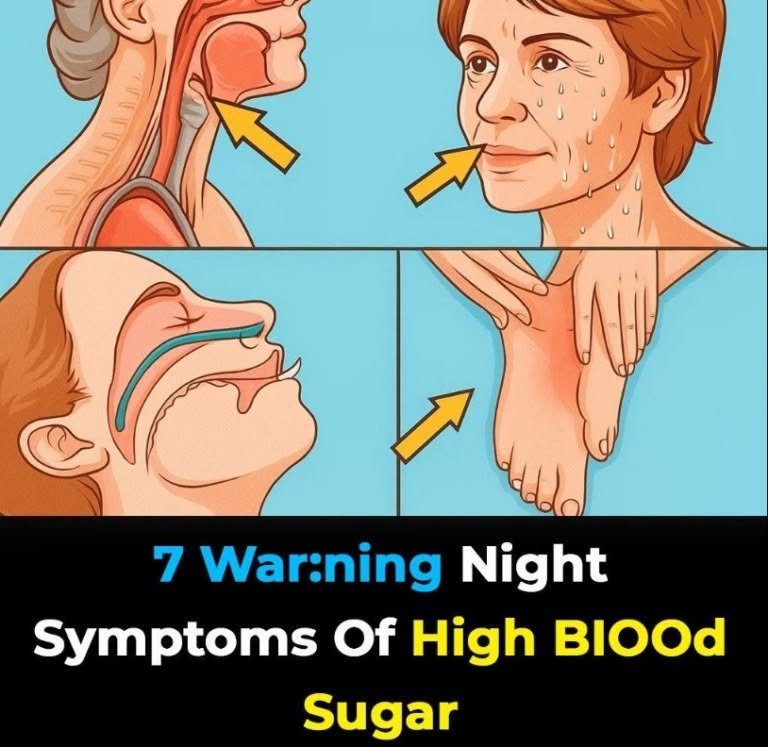
High blood sugar (hyperglycemia) can cause symptoms that become noticeable at night, but none of them by itself confirms diabetes. Persistent symptoms should be checked with a blood-glucose test.
7 nighttime symptoms to watch for
-
Waking up frequently to urinate — excess glucose can cause the kidneys to excrete more water.
-
Strong thirst or a dry mouth — increased urination can lead to dehydration.
-
Nighttime headaches — dehydration and glucose fluctuations can contribute.
-
Blurred vision — changes in blood glucose can temporarily affect the lens of the eye.
-
Tiredness or restless sleep — thirst and repeated trips to the bathroom can disrupt sleep.
-
Itchy or dry skin — can occur with dehydration or diabetes, although there are many other causes.
-
Tingling, burning, or numb feet — persistent symptoms can be associated with diabetic nerve damage, particularly in people who have had high glucose for some time.
Don’t rely on symptoms alone
Some people with high blood sugar have no noticeable symptoms, especially early in type 2 diabetes. An HbA1c or blood-glucose test is much more useful for determining whether your blood sugar is elevated.
If you already have diabetes and develop vomiting, severe weakness, confusion, abdominal pain, or rapid/deep breathing, seek urgent medical care, as these can be signs of a dangerous metabolic emergency.